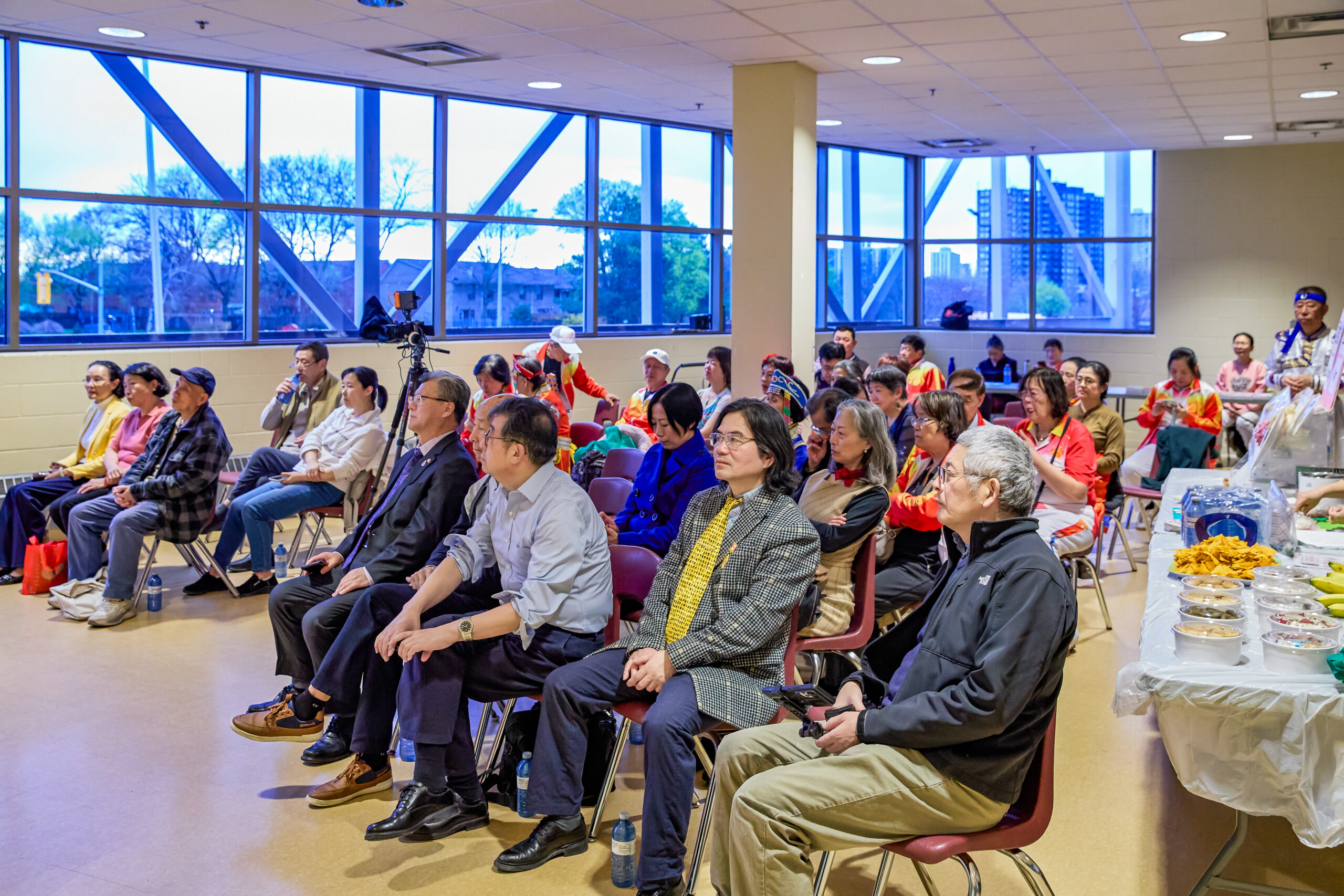
Iwanami: Immigrant literature is a big topic.
Iwanami
What is the relationship between migrant literature, anthropology, and sociology? Furthermore, what constitutes 'migrant values,' the 'migrant perspective,' and the 'essentials of migrant literature'? This is by no means destined to be a hollow or casual discussion; rather, it is a grand discourse intended to leave a deep and lasting resonance.
The current global landscape is undergoing "a once-in-a-century transformation," and no country or individual can escape its influence.China, a major Eastern power renowned for promoting traditional culture, currently has more than 60 million overseas Chinese, according to figures from the State Council’s Overseas Chinese Affairs Office. Of these, 90% have acquired the nationality of their host countries, while 10% hold “permanent resident status” without having acquired citizenship, and are distributed across 198 countries worldwide.For example, there are 9.3 million in Thailand, 8 million in Indonesia, 6.88 million in Malaysia, 2.5 million in Europe, 1.39 million in Australia, 250,000 in New Zealand, 550,000 in Africa, 5.6 million in the United States, and 1.77 million in Canada.
Immigrants come to new places of residence, gaining many new insights and experiences. Many of them pick up a pen (or computer) to start writing, recording their lives and expressing their emotions. For example, Chinese in Thailand are known for “Thai-Chinese Literature,” excelling in poetry; Chinese in Malaysia are known for “Malaysian-Chinese Literature,” excelling in “flash fiction,” and so on. North America is undoubtedly a major literary center, known as “North American Literature.” Many literary giants have emerged, such as Yu Lihua, with her representative work *Still Life*; Nie Hualing, with her representative works *Sang Qing and Tao Hong* and *A Biography of Shen Congwen*; Pai Hsien-yung, with his representative works *A Touch of Greatness* and *Taipei People*; Han Suyin (British), with her representative works *A Tale of Two Cities* and *The Cruelest Fortunes*. Among the most awarded contemporary writers are Li Yiyun, Cha Jianying, Jung Chang, Eileen Chang, and Cui Weixin. For example, Maxine Hong Kingston, with her representative work *The Woman Warrior*; Ha Jin, with his representative work *Waiting*; Amy Tan, with her representative work *The Joy Luck Club*; Yan Geling, with her representative work *The Land of Love and Fire*; Zhang Ling, with her representative work *Gold Mountain*; Li Yan, with his representative work *Bethune*, and so on. Among them, Professors Ha Jin and Li Yan teach at universities and write in both languages. Their works, evidenced by time, possess cross-generational aesthetic appeal and resonance, standing the test of “rereading.” Regardless of changing times, the identity, cultural belonging, and choices of human nature in extreme environments explored in their works can still make contemporary readers feel “deeply moved” or “inspired.” If popular readings are “a gust of wind,” then these works are “a mountain.” Through awards, inclusion in textbooks, academic discussions, and repeated adaptations, they have secured a fixed position in the history of immigrant literature.
In recent years, with the advent of the rapidly advancing information and artificial intelligence age, even world-renowned literary masterpieces from ancient and modern times, both domestic and foreign, and even those of global acclaim, have begun to show their limitations (without denying their classicism and historical significance). For instance, the “miserable” defined and described by Hugo in *Les Misérables* is vastly different today. The statement in Dickens“ *A Tale of Two Cities*, ”It was the best of times, it was the worst of times,“ where conflicting scenarios seem to be dismantled by the times; post-WWII writers” introspective writing, such as Kafka's *The Metamorphosis* describing his own feelings, as if humans have become beetles; Marquez's *One Hundred Years of Solitude* depicting humanity's ultimate descent into solitude, which intensifies with age; Woolf's advocacy for "a room of one's own" for independent thought and self-preservation. And so on. These works halt mid-mountain. Only Tolstoy can be considered to have reached the summit, deeply contemplating the evils of war in *War and Peace*, showcasing the preciousness of peace, and the dialectical unity of war and peace; in *Anna Karenina*, he advocates for individual liberation on one hand, and the establishment of order on the other. Despite the inherent paradox in his self-formation, his efforts to ponder the grand trends of human civilization's development are clearly visible.
Of China's Four Great Classical Novels, “Dream of the Red Chamber” depicts the prosperity, decay, and eventual decline of a large feudal family. The author Cao Xueqin, unable to find a way out, contrives for the protagonist Jia Baoyu to become a monk. In “Journey to the West,” whenever Sun Wukong is unable to defeat demons and monsters, he calls for reinforcements from Guanyin Bodhisattva, ultimately leading the Jade Emperor to recall the demons and monsters, placing hope in the “heavenly court” (the imperial court). “Water Margin” depicts peasants being “forced onto Liangshan” to rebel, only to end with an “amnesty,” whether willingly or unwillingly, ultimately placing hope in the imperial court. In “Romance of the Three Kingdoms,” the author uses Zhuge Liang's mouth to say, "Who first woke from this great dream? My life I've always known," known for what—"The empire, long divided, must unite; long united, must divide." Why is all of this happening? The author does not know. Because in past feudal societies, China's isolationism was severe. The achievements of philosophers and philosophical thought generated in ancient Greece over two thousand years ago, as well as the latest developments and rational research on social development, could not have reached China. China has always been circling around "Confucianism, Buddhism, and Taoism."
Consider the two domestic classics that have been reprinted most frequently in recent years—Chen Zhongshi’s *White Deer Plain* and Jiang Zilong’s *The Peasant Empire*—the sheer number of reprints indicates their considerable popularity among readers and the market. Readers are discerning; since they are spending their own money, they must judge whether a book is worth the price: *White Deer Plain* was first published in 1993 and has been reprinted 15 times to date;*The Peasants“ Empire* was first published in 2008 and had been reprinted 13 times by 2019; not only that, but these two novels have also received the most prestigious treatment from publishers—the ”bound-in-cloth“ edition—which is the most costly and labor-intensive publishing method, clearly demonstrating their golden status in the publishing world.However, in *White Deer Plain*, Mr. Zhu—a representative of Confucianism—describes the fierce back-and-forth struggle between the Kuomintang and the Communist Party on White Deer Plain as ”flipping a wok“ (suggesting they are equally matched). While this is certainly vivid and profound, it must be said that on this level, the narrative has not progressed further;*The Peasant Empire* embodies the lingering traditions of China’s five-thousand-year agrarian civilization, pointing out that it has not escaped the imperialist ideology of narrow-minded selfishness and the desire to monopolize absolute power (a real-life example is Wu Renbao of Huaxi Village, who achieved remarkable success; Huaxi Village was once hailed as ”China’s Number One Village,“ but at that time, Wu Renbao exercised total control, and his four sons monopolized the village’s financial power, drawing widespread criticism;while the leader of another ”Number One Village in China,“ Daqiu Village, was imprisoned for abusing his boundless power and violating laws and regulations).Jiang Zilong’s insight is rare and valuable, yet it stops short at this level. Neither Chen Zhongshi nor Jiang Zilong took a reflective ”next step“ in the sociological sense, akin to that of Tolstoy. Of course, this is already quite remarkable. The state of domestic literature is inseparable from specific national conditions; whether thinking that exceeds permitted boundaries can be realized is another ”domain of inquiry.”
Literature is the study of humanity. This view was first proposed by Professor Qian Gurong of East China Normal University in 1957. While the former Soviet Union's Maxim Gorky had discussed similar ideas, he did not form a systematic theory; Professor Qian was the one who systematized and theorized it. However, restricting literature to this scope does not represent reaching the “summit.” As Marx stated, “The essence of man is the totality of all social relations.” Human issues are inseparable from society. Furthermore, Marx pointed out, “Existence determines consciousness” and “The economic base determines the superstructure.” It is society that shapes people in various ways. Genetic inheritance also plays a role, but it is incomparable to the shaping power of society. How writers can take a new step, like Tolstoy, is both a call of the times and the expectation of readers. Particularly today, the development of East and West is increasingly converging. In the past, Marx spoke of socialism needing to be built upon developed capitalism, with options such as class struggle, violent revolution, and the dictatorship of the proletariat, as well as democracy, parliamentary systems, trade unions, and joint-stock companies. The former Soviet Union and China chose the former, while Nordic countries, Canada, Britain, France, Germany, Italy, and others chose the latter. Currently, it seems they are reaching the “same destination by different routes,” and the Nordic countries and Canada have better development momentum: stable social development, a contented populace, worry-free lives, and a sense of fulfillment. China, after the Cultural Revolution, began its reform and opening-up, adjusting and liberalizing many policies. This seemed like a “regression” but was actually development, with the “primary stage theory” and “catch-up theory” in the early period, followed by the “theory with Chinese characteristics” later. Could development have occurred without this “catch-up” phase? China's socialism was built upon a semi-feudal, semi-colonial foundation, making it impossible to form the kind of socialism Marx theorized. The superstructure cannot escape the feudal “patriarchal” style. This is even further from achieving the “modernization” brought about by industrial civilization, commercial civilization, contractual civilization, and even legal civilization. Western values include “democracy, freedom, equality, and the rule of law.” China's 24 core socialist values also contain these elements, indicating that in terms of values, they are also converging by different routes. All of this is something that “emigrants” who have “gone abroad” can better attest to, as they have not only “heard and seen,” but also "personally experienced" it. What is true modern civilization? How does it shape people? It seems that only "immigrants" can explain this more clearly.
Excellent literature is a beacon that illuminates life. In the early days of China's reform and opening up, when “Factory Director Qiao” broke through the gloom of “scar literature,” critics promptly pointed out: “Literature can reverse the decline of our era!” In the face of the current global situation, if Chinese immigrant writers continue to dwell on past “political movements” and endlessly criticize them, unable to break free from this limitation, have they ever considered how “those things” came to be? A famous saying needs to be savored: “The direction of historical development is the result of complex forces.” Every effect has its cause. There is no “free lunch” in the world, nor is there a “sudden disaster.” God (Heaven) does not favor anyone. Even “exceptions” have “other reasons.” This is materialism. If one remains immersed in the “small successes” of individual struggle, with a mind full of “small visions,” “small feelings,” and “small sentiments”... it is impossible to have a high-level perspective and look down upon the present era with foresight. Not to mention treating literature merely as a tool for entertainment. However, current reality presents immense opportunities for immigrant writers. While the milestones set by our ancestors are history and unshakeable, in the face of the era's call and challenges, a famous line of poetry comes to mind: “All are past, for truly great figures, we must look to today!” For the hundreds of thousands of literary writers among the more than 60 million immigrants, whether you can achieve greatness depends on you!
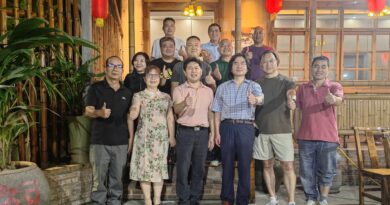
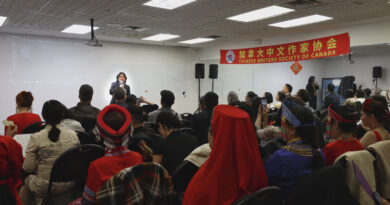
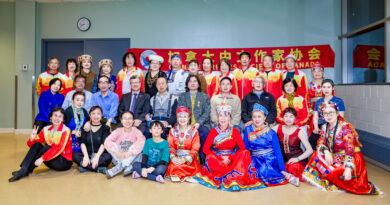
(This article is adapted from Mr. Yanbo's speech at the seminar "Four Dimensions of Immigrant Literature" organized by the Chinese Writers Association in Canada at the end of April.)
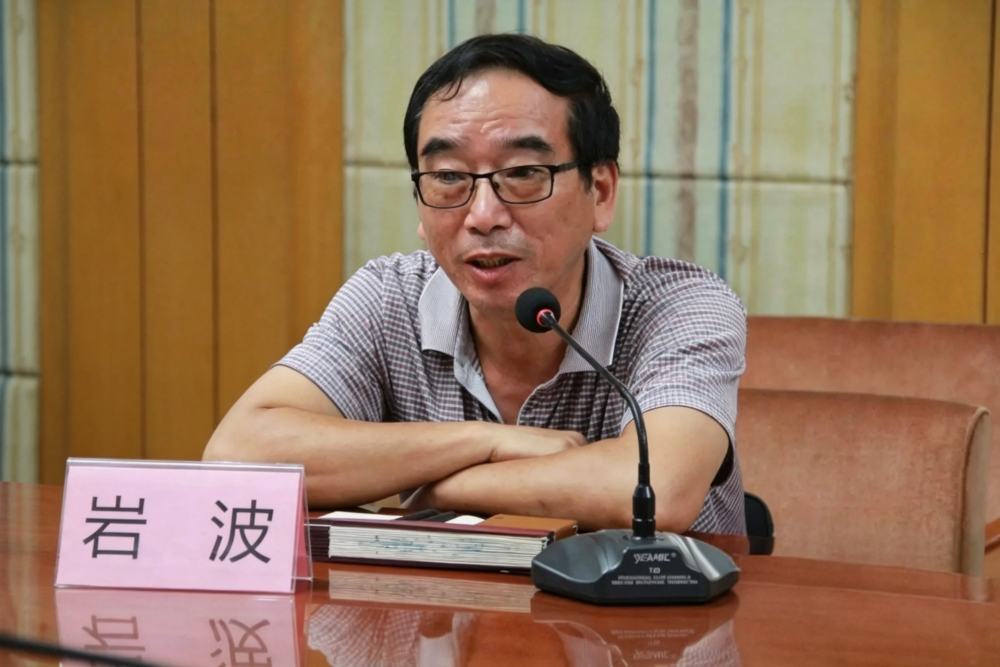
[Author Biography] Yanwen, originally named Li Chongyuan. A member of the Chinese Writers Association and vice chairman of the Canadian Chinese Writers Association. He has published over 20 novels, totaling more than 6 million characters, including “The Republic of Virtue,” “Red Star Chronicle,” “1943, The Great Gold War,” “Stars Shine Bright Tonight,” “Lock Picker,” “Wolf Mountain,” “King Pigeon,” “Eat Drink Man Woman,” “That Year, Those Soldiers,” and "Secret War." His micro-fiction "Amnesia" was selected for the "Contemporary World Chinese Flash Fiction Masterpieces Collection" in 2011. His novel "Male Boss and Female Boss" won third prize in the realistic literature category of the "Changjiang Cup" in 2011. His novel "The Female Municipal Party Secretary's Male Secretary" was among the top 5 on Sina China's "Good Book List" for four consecutive years from 2011 to 2014. His short story "Father and Son" was recognized in Guizhou Literature's "Top 100 Writers of 2015." His lyrics "Yan'an Love" and "Hold Mother's Hand" won silver awards in national competitions, "Tianjin Folk Song" won a gold award in a national competition, and he was awarded the honorary title of "Golden Lyricist of Chinese Song Creation" by the China Association for Mass Culture in 2017. His essay "Two Mid-Autumn Festivals in Arkhangelsk and Maowusu" received a "Special Honor Award" from the Canada-China Cultural Exchange Association in 2021. His collection of novellas and short stories "Toronto Chinese" won the "Outstanding Literary Work Award" from the China Federation of Returned Overseas Chinese in 2021 and has been collected by the Library of Congress, the University of Toronto Library, the Harold B. Lee Library at Brigham Young University, and the Ohio University Library. His non-fiction novel "Wind and Rain Maowusu" was selected for the National Press and Publication Administration's "2022 Recommended Key Books for Chinese Farmhouse Libraries," the Propaganda Department of the CPC Central Committee and the Ministry of Agriculture and Rural Affairs' "2022 100 Books Loved by Chinese Farmers," and the Ministry of Education's "2023 Recommended Key Books for National Primary and Secondary School Libraries." His micro-drama "It Snowed in Toronto Today" won third prize in the "Sino-American Writers Association Cup" Global Competition in 2024. His novels "Purity," "Underground Transportation Station," "Divorced Man," "Stars Shine Bright Tonight," and "Antique Circle" are featured programs on Tianjin People's Radio. His paper "Comparison and Enlightenment of Chinese and Foreign Grain Policies" won an excellence award at the "21st Century China Reform and Development Forum" and was included in the "Xinhua Literature" series "Let History Tell the Future." Many of his works are distributed domestically and internationally.