Mei Guoyun: The Hawksbill's head is Wenchang.
Place the mouse pointer on the map of Hainan Island, then zoom out to 1:200Kilometers away, Hainan is like a hawksbill turtle, preparing to swim through the wider waters north of the Bashi Channel towards the vast Pacific Ocean.
If we closely observe the movements of a sea turtle, we can infer its motivations. In its lifelong home, the South China Sea, one day it suddenly felt it had grown up and excitedly swam out. When it reached the Gulf of Tonkin, it discovered land blocking its path ahead. Then, it extended its right front flipper and swiped downwards under its belly, while its left front flipper gently pushed backward on the water's surface, causing its entire body to turn to the right by 45 degrees.When it reached 5°, the head narrowly dodged the Leizhou Peninsula. Suddenly, an infinitely vast body of water appeared before its eyes, and it immediately felt inspired to travel the world.
But in the end, it didn't swim forward. It froze. It seemed to have heard a calling. If it were to remain eternal in this posture, it would bring to the people living on its body in the future open vistas, abundant harvests, magnificent scenery, brilliant culture, and everlasting peace...
Because of this posture, it became a symbol of auspiciousness and nobility. Legend has it that Guanyin Bodhisattva, who saves the suffering and navigates the sea, had its companion by her side. This also explains why Hainan people are always proud that the shape of Hainan Island resembles a玳瑁 (dàimào).
The hawksbill, facing the Bashi Channel, towards the vast Pacific Ocean, is precisely its head, facing the hurricanes and towering waves. Very interestingly, this entire head is Wenchang. Since its solidification, Wenchang must accept the challenge of the world's largest ocean, and it must bear the responsibility for the well-being of the entire island.
In fact, the place in Hainan that experiences the most typhoons every year is Wenchang. When tropical storms and typhoons enter the northwestern South China Sea, Wenchang is always battered violently.
According to statistics, Wenchang is affected by tropical storms and typhoons an average of 4 times each year, with an average of 2 storms reaching level 6 or higher, an average of 0.9 storms reaching level 8 or higher, and an average of 0.2 storms reaching level 12 or higher. On July 18, 2014, at 3:30 PM, historically recordedThe most powerful Typhoon Rammasun peaked at intensity level 17, with a wind speed of 60 meters per second.Sweeping across Hainan. In Wenchang's Wengtian Town, the most severely affected area, houses were almost entirely destroyed or damaged, trees were nearly all snapped, and the scene was more tragic and devastating than in disaster movies.
The typhoons' bullying of Wenchang, with their high frequency, great intensity, and deep damage, has become unbearable even for the coconut trees. It's unknown since when, but vast groves of coconut trees have grown on the eastern coast of Wenchang. Especially on the coastal peninsula of Dongjiao Town, looking at the boundless belt of trees, one can only be filled with awe for nature. Why such a massive scale of coconut groves grew in this windy spot on Hainan Island remains a mystery to this day. If we use a writer's imagination, perhaps the Bodhisattva of Compassion in the South China Sea, unable to bear witnessing the devastation of typhoons on Wenchang, one day ordered the god of coconut trees to travel from all directions, gathering together to form windbreaks.
Wenchang not only suffers attacks from tropical storms and typhoons, but in ancient times, it was also frequently troubled by earthquakes. Even today, it remains a place where M1-level earthquakes occur frequently.。In the Wanli period of the Ming Dynasty (AD(1605), a great earthquake occurred in the Qiongnan region, causingWenchang AppointmentOver 100 square kilometers of land, with a total of 72 villages, have vertically sunk to the seabed.
Evidently, this is not only the gateway for the island to resist storms from the eastern Pacific, but also the frontline fortress for the entire island to withstand the earth's unrest caused by the central subsidence of the Leizhou Depression. Such a windy and precarious location is one of the earliest regions in China to enter the Neolithic Age, boasting a civilization history of over four thousand years, and is an important birthplace of Hainan's prehistoric culture. As early as the Neolithic Age, in Fengming Village, Changsa Town, Wenchang, villages of varying sizes formed settlements. The mysterious Thunder God's Chisels, crescent stone saws, and stone arrowheads emit a captivating glow from ancient times.
Since the heavens and earth were created, this tortoise has borne the fate of “a rainbow filling the sky after the storm” for Wenchang. Tribulation and glory are not without cause and effect; all things in the universe repeatedly prove themselves from birth. The tortoise's posture towards the ocean is like that of a person with aspirations to embrace the world, yet capable of enduring all its hardships, clearly not an ordinary being.
Xinpu Bay in Wenchang, facing the northern mainland across the sea, asks why generations of Wenchang people, risking death and venturing into foreign lands across tumultuous waves, never crossed the strait to the mainland's interior to find a peaceful, fertile land to settle. It's because the people here knew that what lay before their eyes, like a hawksbill turtle, was the most vast ocean on this planet. The more the wind and waves sought to engulf this land, the more Wenchang people were determined to stand firm. Records indicate that over 1.2 million overseas Chinese with ancestral roots in Wenchang now reside across more than 50 countries and regions, more than double Wenchang's current population. This illustrates the immense scale of Wenchang people who ventured across the oceans in those days.
In the 1950s, archaeologist and historian Han Huai-zhun, a Wenchang Overseas Chinese, discovered that the shape of stone tools he found in his hometown of Fengming Village were similar to those in some parts of Southeast Asia, but distinctly different from those in the Yellow River Basin area to the north. This led him to infer that the ancestors of Wenchang had contact with the ancestors of Southeast Asia as early as 4,000 years ago. The Wenchang people's "dare to be the first in the world" gene was likely sown at that time. Their innate spirit of "traveling the world with abandon" and their courage to survive in the face of danger allowed them to establish roots wherever they went. Their most outstanding representative was perhaps Song Jiashu, an Overseas Chinese who accumulated considerable wealth and invested a large portion of it in Sun Yat-sen's revolutionary movement, making a significant contribution to the success of the Xinhai Revolution. Later, even his children, Song Ailing, Soong Ching-ling, Soong May-ling, and T. V. Soong, became influential figures on the Chinese political stage, greatly impacting Chinese society.
People from Wenchang who venture out to the ocean either become overseas Chinese or fishermen. The "Geng Lu Bo" (Sea Route Maps) in the South China Sea Museum truthfully records the routes and sea conditions of fishermen from Qinglan Port to the South China Sea, with their footprints covering hundreds of islands and reefs. They, along with the fishermen from Tanmen in Qionghai, were the first to discover the Xisha, Dongsha, Zhongsha, and Nansha Islands, opening up over 200 production and operation lines, and naming more than 120 islands and shoals, giving them identities.
The *Gazetteer of Wenchang County* provides detailed accounts of Wenchang fishermen going to the South China Sea to fish. In the turbulent South China Sea, fishermen would be away for half a year at a time. Over centuries, countless fishermen have lost their lives at sea. Every family has relatives who perished at sea. They knew that going out to sea was risking their lives, yet generation after generation, through the troughs and crests of the waves, they pressed forward without fear.
In the character of Wenchang people, there is both the steadfastness of venturing out and the loyalty of staying put. They venture out gloriously and stay put with deep devotion. When men leave for Nanyang or go out to fish, it is the women who are most worried and have the deepest longing. The women face the boundless sea of suffering and taste all the bitterness.
We don't know how many men who left for Southeast Asia never returned.
Some lost their lives at sea before even setting foot on land; others died far from home long before their time.
Others established businesses and families outside, only to return to Wenchang decades later and realize their wives had lived as widows their entire lives.
Many women don't know that their husbands, after only a few days at sea, are devoured by fish, becoming widows as soon as they are wed. But as long as they don't see a body or get definitive news, they will continue to wait.
Some women become widows in their teens without having any children, yet they remain chaste, serving their in-laws their entire lives until the elders pass away, until they themselves grow old and leave this world alone.
Chastity maintained by women is not just about loyalty to men, but also about guarding the foundation of the home.
In Wenchang, it's not just women who persevere; men do as well. Those who left for Nanyang always carried their homeland in their hearts, never forgetting which village in Wenchang they came from, nor their ethnic identity.
They donate to education and invest in hometown development, which is a steadfast adherence;
Building Nanyang-style houses in Wencheng and Puqian is a form of perseverance;
Their renovation of ancestral halls and updating of family genealogies is also a form of perseverance.
The men who did not flee to Nanyang, for the continuation of their family line, for the ancestral temple and clan hall, and for the prosperity of the family, all showed their unyielding perseverance and intelligence.
“Half of Hainan's government officials are from Wenchang,” meaning half the people in Hainan's government are Wenchang natives. Although this statement is an exaggeration, it reveals the Wenchang people's aversion to complacency. They aim to bring glory to their ancestors and possess a deep sense of patriotism and concern for the nation and the world.
At No. 20 Wendong Road, Wencheng Town, there is a Confucian Temple, also known by locals as the Wenmiao or Sacred Temple. It was first built during the Northern Song Dynasty's Qingli era (1041-1048) and is nearly a thousand years old. It is one of the few ancient architectural complexes on Hainan Island that has been preserved in its entirety.
The people of Wenchang not only value upholding their family businesses but also protecting their great legacy. Because of their steadfastness, the Confucius Temple has become not only the cradle of ancient education in Wenchang but also the birthplace of modern education. “Cease military preparations, cultivate civil education” – the very name “Wenchang” was earned by its people for safeguarding their cultural legacy. Today's Wenchang Middle School has always been a key middle school in Hainan Province and ranks highly even nationwide. Despite being at the forefront of change, Wenchang is also one of the cities and counties on the island with the most preserved historical sites, owing to their commitment to preservation. Famous historical sites such as the Wenchang Confucian Temple, Doubeng Pagoda, Han Family Residence, Puqian Town, and Shibaxing Village bear witness to the profound history and glory of Wenchang.
Furthermore, thanks to their perseverance, urban and rural construction in Wenchang has long since bid farewell to the past after Super Typhoon Rammasun in 2014. The confidence of the people of Wenchang stems precisely from their unyielding spirit of facing challenges head-on.
On April 20, 2017, China's first cargo spacecraft, Tianzhou-1, was launched into space by a Long March 7 Y2 carrier rocket at the Wenchang launch site, heralding China's entry into the “space station era.” This is the most beautiful “rainbow” created by humanity “after the storm.”
It is the direction of Wenchang that determines the direction of the entire Hainan. And it is because of the hardships that Wenchang endured that Hainan and the South China Sea have achieved their beauty. If all the islands in the world had a beauty pageant, I estimate Hainan Island would make it into the top three.
Compared to the entire island, the area of Wenchang, due to enduring the greatest winds and waves for hundreds of millions of years, has been eroded by the sea into a narrow head. Below the head, it gradually widens into a round body that is wider in the middle and lower around the edges. This not only resembles a beautiful tortoise shell, but also has created countless rare species on this magical 35,000 square kilometer land.
China is a vast and resource-rich country. Compared to the mainland, Hainan is home to 561 species of wildlife. Among them, there are more than 70 species of mammals, accounting for 21.1% of the national total; and more than 340 species of birds, accounting for 26.1% of the national total.Hainan is home to approximately 5,860 species of terrestrial plants. Among these, there are 4,680 species of vascular plants, accounting for 15.1% of the national total; 2,200 species of trees and shrubs, accounting for 28.61% of the national total; and 3,100 species of medicinal plants, accounting for 30.1% of the national total.Hainan has long been known as a “natural pharmacy.” Among these medicinal plants, 2,500 species are closely related to human health. Agarwood, Aquilaria sinensis, and Huanghuali are particularly prized as rare treasures.
This unique orientation, crafted by heaven and earth, has also profoundly influenced the culture of the entire island of Hainan. For thousands of years after the Neolithic era, continental northern cultures crossed the strait, mostly integrating in northern Hainan before developing southward. In a sense, Wenchang played a crucial role as a bridgehead.
Hainan Island's culture is exceptionally vibrant, and perhaps the most vivid aspect of it is its dialects. On this small island, there are over a dozen dialects, including Li, Miao, Danzhou, Lingao, Hakka, Cunhua, Fuma, Huihui, Baihua, Maihua, and Dajia. It is a rare linguistic treasure trove for the world, much like the thriving flora on this island. They coexist independently, without infringing upon each other, yet they show mutual respect and grow together. Each language represents a distinct ethnic group.
It is unknown how Wenchang and the other places in northern Qiongzhou accepted these foreign ethnic groups in the past, and how they managed to disperse peacefully throughout the island, take root, and settle here. If Wenchang and northern Qiongzhou were both cultures of invasion, how could they have preserved more than a dozen dialects in such a small land?
The humanistic traditions of the islands have nourished the South China Sea, shining like the sun and moon for thousands of years, making it a waters of peace, a rare sight globally. Somali Sea, Carlsberg Ridge waters, Peruvian coast, Gulf of Aden, Arabian Sea, Strait of Malacca, Gulf of Guinea, Red Sea, Tanzanian coast... piracy is rampant. Wars that have occurred at sea throughout history, notto knowHow many? And some islands, due to geopolitical issues or ethnic and religious issues, have been joined and separated from the adjacent mainland. Although the South China Sea has also experienced brief provocations by foreign powers, in any case, the South China Sea is one of the few peaceful seas on this planet.
The orientation of the Hawksbill turtle is a totem that brings prosperity and blessings for thousands of generations to Hainan. Without a doubt, Wenchang is a great book worth writing.
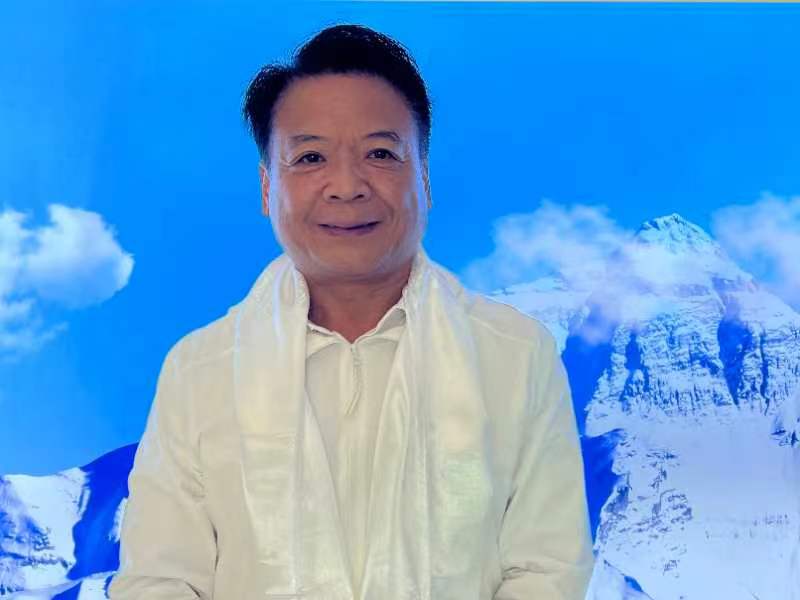
Author Biography:
Mei Guoyun, a Member of the National Committee of the China Writers Association, Chairman of the Hainan Writers Association, and President of "Tianya" magazine. She has published the novels "Kidnapping" and "The 39th Day," the poetry collection "A Glimpse of the Void Unknown," and the art collections "Images Beyond the Brush" and "Character Forms," among others.