
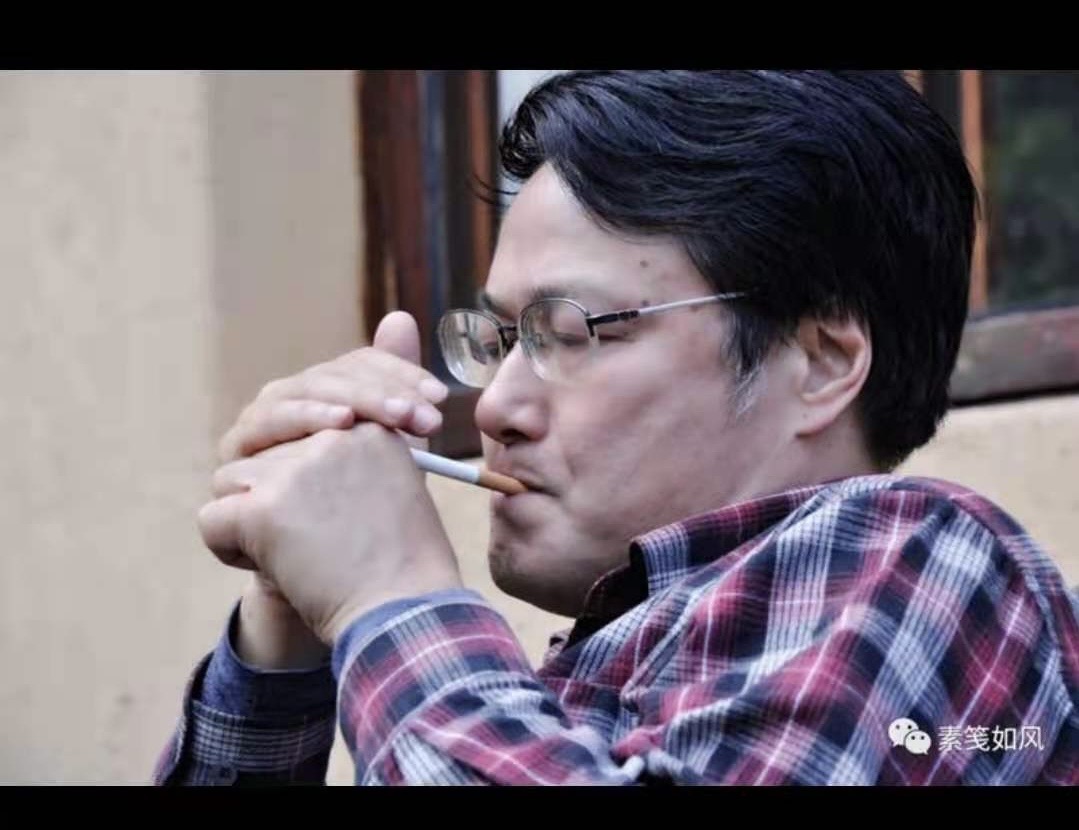
Jiang Yibin's Essays: In Memory of Ye Weilin (Another Piece)
Jiang Yibin
By the way, writing this title surprisingly made me feel a bit heavy-hearted. It seemed like someone was no longer eating "the people's rice" (a metaphor for living off public funds or the state), while I was agonizing over writing a memorial piece. But that's not the case. Comrade Ye is still eating "the people's rice" and living well. It's just that his hearing is a bit poor. If you talk to him in the style of singing Hunan Opera, it's clearly not enough. You have to roar at him in the style of Peking Opera, with a high-pitched voice, for him to have the slightest reaction. He'll give a slight smile and say, "Oh, you mean it's not raining today?" Frankly, who the hell was talking to him about whether it was raining? The sun was shining brightly outside; who would ask him if it was raining?
Given this, once someone visits Comrade Ye's residence, if I happen to be there too, I'll have to remind the visitor, and summarize Comrade Ye with a Tang or Song dynasty poem: Old Ye, he's sixty, can't sleep well, can still drink, his hearing is poor, don't be afraid of him, speak loudly, and he'll hear.
Thinking back to those initial days, a dozen or so of us from Hunan, without a single gun, kicked off that cold winter and flew to Hainan Island like a flock of migratory birds, wanting the scorching sun to tan our skin, so we wouldn't need makeup to play Africans later. So, I soaked in the seawater three times, rolled five times on the silver-white beach, and two years later, quietly slipped back to Hunan, becoming a Fu Zhigao in name and deed.
At that time, hundreds of thousands of people were crowded onto that small island swept by sea breezes. Initially, Comrade Ye, Comrade Han, and other comrades determined to defend the South Gate were all-rounders, working diligently and solidly as receptionists and cooks. Imagine, people from all over the country, from all walks of life, familiar and unfamiliar, rushed onto Hainan Island, all flocking to their homes, turning their homes into a communal mess hall. As the saying goes, isn't it a joy to have friends visiting from afar? Therefore, their homes were almost always hosting banquets. One group was still eating when another group, drenched in sweat, rushed over, forcing them to quickly wash rice, stir-fry dishes, and wash bowls and chopsticks, as if instantly transported back to 1958.
According to reliable data provided by Comrade Ye, his family consumes a shocking three hundred jin of rice per month.
Comrade Ye is a good comrade, but even a good comrade has a limit to their patience. Finally, his face stern, he got angry and was no longer willing to be this blasted receptionist and cook. If anyone again said that a fellow countryman from Hunan had arrived, he angrily stated, "I'm not from Hunan." Of course, this was the honest truth; he was from Guangdong. Naturally, some people also doubted that a person as tall as him could come from Guangdong. Later, in tracing his roots, he was found to be from a certain place in Henan. From this, we can see that it's not difficult for a person to do one good deed; what's difficult is doing good deeds all their life.
Many years have passed in the blink of an eye, and I was shocked to hear about the passing of Comrade Ye's wife. My sorrow is beyond words. Fortunately, he has many friends and often thinks of Hunan, the land where he lived for nearly thirty years. Like a migratory bird, he returns each year to spend some time here. During these visits, he becomes a busy member of the CPPCC, tirelessly inspecting various places, touring Western Hunan with friends, visiting Yueyang, seeing Yongzhou, and traveling to Zhuzhou. He is not a poet, so he left no poems behind. He is a novelist and essayist, and thus he has left many writings, which are still filled with poetic sentiment.
And I want to remind you all, it's best not to travel with Comrade Ye.
First, you don't have a superhuman golden voice, so it's impossible to sing in a high register with him day after day. If you do sing in a high register, it would only last five minutes at most. After five minutes, you'd obediently step down and let someone else take over. Therefore, when he gives a report, everyone listens intently, but when others give reports, although his eyes are still very politely looking at you, in reality, he's not listening at all. So, your report essentially amounts to wasted breath.
Here's a translation of the provided text: One person you should never travel with is someone who loves to drink. If they don't drink, they'll sit down at a table and in just three to five minutes, they'll have consumed everyone's rice, as if a ghost is about to catch them. Afterward, they'll just sit there, looking dazed but very politely. If you ask them to wait for half an hour, they can manage; they might go for a walk outside and come back. But what about an hour? Three hours? What's more, when drinkers get carried away, time becomes worthless; they can go on all night long. Are you supposed to abandon them and leave them alone? What if they happen to get lost? How would you find them?
One is that people who like to play mahjong should also avoid going out with him. Why? He doesn't play mahjong, nor does he sit idly by and watch you play. So what does he do? He still has something to do. Comrade Ye held a cup of tea and sat alone quietly in a corner, as if contemplating revolutionary matters of the world, without any expression of impatience, and certainly not urging anyone. However, his friends felt awkward. They couldn't just watch him ponder important issues all evening while they were indulging in trivial pursuits.
To be honest, he seems to sympathize with mahjong culture and look down on drinking culture. People who play mahjong are refined and polite; at most, they peek at other people's hands, which isn't a big deal. But people who drink are different. They roll up their sleeves, bang on tables, argue, make a ruckus, and get red in the face. Although this noise doesn't significantly affect his ears, it does affect his eyes. He can't stand that kind of bandit-like shouting and yelling.
From time to time, I receive new books from Comrade Ye, and over the years, I've also occasionally seen his new works in publications or his columns for newspapers. I suppose so, what else could he do if he didn't write and read books? He doesn't have the guts to rob a bank, unlike Zhang Jun. He doesn't have the capability for corruption, unlike Hu Changqing.
So, it's more practical to stick to one's original trade.
His feelings for Hunan are deeply ingrained, deeper than the deepest ocean trench in the world. Here are two examples to illustrate this point.
First, every time he went to Hunan, he couldn't wait to see his friends in various places, as if if he didn't rush to see them, he might never see them again. Upon meeting, they would chat and ask about their well-being, much like a senior leader coming to offer comfort. When parting, Comrade Ye would even hug the other person, looking very reluctant to leave. If the other person was a woman, I could understand, as many young people nowadays hug and embrace on the street. Why couldn't he hug? The problem is, the other people were all men, and I didn't quite understand that. Another issue is, I could accept it when Westerners do this, but when this Easterner does it, it always makes me feel a bit sour, as if it were a permanent farewell.
Second, whenever he went to Hunan, he continued to contribute to stimulating domestic demand. It was as if he brought back a ledger of turning the tables. On that ledger, everyone who had ever eaten at his commune canteen before was registered, not a single person escaped. He thought wickedly to himself, "You little brats, where do you think you can run? I'm back today!" So, every afternoon, he would open the ledger, make a phone call, "So-and-so, I'm here. You're treating this afternoon." Then, without hesitation, he would cross off that person's name. He must have been beaming with satisfaction, thinking, "Brother, our accounts are finally settled." If he continued this way, I think he could easily eat there for three to five years in Hunan alone, and he definitely wouldn't starve, and this doesn't even include all the people from other provinces.
This shows that Comrade Ye truly has foresight, thinking about events more than ten years in the future over a decade ago. He also thought that if he hadn't gotten angry back then and continued to play the exemplary role of receptionist and cook, then even in his next life, he wouldn't have to worry about not having food to eat if he came to Hunan.
Actually, he's a little wronged about this. Every time we eat, he whips out his wallet and rushes to pay the bill, as if he's become some kind of southern overlord after returning from Hainan, with endless money in his pockets.
Of course, Comrade Ye was sometimes quite pessimistic. It's understandable when you think about it: his hearing wasn't great, he couldn't drink alcohol, play cards, move around easily, or fight. So, he would often shake his head by himself and say, "It has no savor, no savor." This kind of pessimism could be quite harmful to young people, and fortunately, no elementary or middle schools invited him to give speeches.
A friend advised him, "It lacks flavor? Then add some MSG."
Comrade Ye smiled slightly upon hearing this, a smile very much like that of a certain leader.
Another friend cruelly followed up with, "Then why don't you jump off the building?"
That makes some sense. The apartment Comrade Ye is currently living in would be a good floor to jump from. His child rented it for him, the seventeenth floor. If he jumped, he definitely wouldn't need to trouble the doctors anymore. Besides, the doctors are really swamped right now, all fighting SARS.
He seemed quite interested in his friend's words, and indeed slowly walked to the balcony, peered out, and perhaps out of fear, timidly walked back, saying, "I don't have the courage."
My friends sighed and felt deeply sorry for him: how could a person who had served in the military for many years become so timid?
Moreover, friends all wanted to be spectators with great interest, but Comrade Ye didn't even give them this opportunity, what can be done?
See Mr. Ye off
Suddenly, I received a call from a friend. That deep, sorrowful voice told me that Ye Weilin had passed away from illness today (December 5th) in Haikou. I was stunned and couldn't speak for a long time.
I understand that life is unpredictable. Yet, I still can't believe it. Is it possible that a strong and imposing man could just quietly leave like this? Leaving this bustling world behind? Silently taking with him his charm, his handsomeness, his richness, and his loneliness?
After seventy-one springs, will the strings of the zither break and come to an abrupt end?
When I was in Changsha before, I didn't have much contact with Ye Gong. We'd have meetings or meet briefly. Eighteen years ago, some of us went to Hainan one after another, and then returned to Hunan. It was during that time that we had more contact. At that time, the small island of Hainan was overcrowded, and the people who came to his house were like a revolving door. So, his home and Han Shaogong's home were like a People's Commune cafeteria, with constant banquets, making one feel like they were back in 1958, except that every guest was well-fed and content. After that tide of talent receded, Han Shaogong, Ye Gong, and a few other excellent cooks settled on that beautiful island.
Later, Ye Gong would often return to Changsha, always coming and going quietly. He didn't want to disturb many people, fearing he would trouble others. Of course, every time he came to Changsha, he would call me. I knew that the reason he visited often was that he had many friends here, the land that had nurtured him, and the mountains and rivers that had given him much inspiration.
He can't bear to leave this land.
In Changsha, because he lived alone, I wanted to create some lively fun for him, so my friends and I would often invite him to dinner. He didn't like to eat out and this wasn't him being polite or showing off, despite being an excellent cook. He just didn't want to spend one, two, or even three to four hours eating. He was actually willing to showcase his cooking skills at his place, even making salads and such. Sometimes, if a friend insisted on inviting him to dinner and he couldn't refuse, he would go, flicking his cigarette into the air and saying, "Alright, let's go." He never drank alcohol, while everyone else were heavy drinkers. Each time, he would basically finish his meal in ten minutes. He said it was a habit he developed in the army and he couldn't break his fast eating. For the drinkers, the "battle" hadn't even begun. If the guest had already finished his "mission," how could the meal continue? Should he just sit there silently watching us clink glasses? His hearing wasn't good, so he couldn't clearly hear what we were saying, which naturally diminished a lot of the enjoyment. But Ye Gong was understanding. Having been a soldier, he knew the "battle" at the table hadn't started. To avoid dampening everyone's spirits, he would say, "You all drink slowly, I'll go for a walk outside and be right back." When our friends heard this, they thought it was a good idea, allowing everyone to enjoy themselves in their own way.
Of course, a few traces of apology still appeared on Zhang Zhang's face.
That restaurant is located by the river, with a gentle river breeze blowing. So, let him stroll slowly in the city night, letting him recall all the joys and sorrows that have happened in this land, immersing himself in those happy and bittersweet days. With Elder Ye temporarily absent, we became even more boisterous, as if we were going to settle the score at the table, fighting until tomorrow morning. About half an hour later, his tall figure suddenly appeared at the glass window, glanced inside, chuckled, and said, "Still haven't finished drinking?" Then, he walked back towards the river alone.
I remember he went back and forth four times that night. We felt too embarrassed, so we quickly ended the fight.
Ye Gong was tall and burly, with a straight back. We often joked that he would live a long life – his ears were extremely long and large, fleshy, definitely ears of longevity. As for the backs of his ears, they also had a great advantage; idle gossip couldn't get in, saving him a lot of trouble.
In addition, we really cannot see any other flaws he has.
Gradually, I started to feel that his hearing loss was a big problem and made communication very inconvenient. We would have to shout loudly, to the point of bleeding from our throats, just for him to hear. In fact, he had hearing aids, but he probably felt they damaged his image, so he generally didn't wear them when he went out. Without them, friends had to strain their voices. But friends' voices aren't made of diamond; after a few shouts, they couldn't keep it up. This, therefore, created a major obstacle to communication.
These years, when he came to Changsha, he almost always called.
This year, I haven't received his calls.
My friends are all asking why Lord Ye hasn't come this year.
I don't know.
I wonder if the hearing impairment created a barrier, making him unable to grasp that his friends' voices were made of flesh and blood, thus causing him to sever ties with them? Or is it a profound sense of loneliness that deeply troubles him? Or perhaps the reason for closing his doors to visitors is age? Yet, so many people his age live such fulfilling lives. Otherwise, it wouldn't have led to a complete physical breakdown in the end. Yes, I heard it was a complete collapse, leaving no hope for recovery.
Like a tall, sturdy wall, one shout and it crumbles.
Lord Ye left.
A tall, solid wall collapsed.
That night, I was drinking with a few friends. I first filled a glass with wine, then raised it, poured some onto the ground, and said, "Duke Ye, you are far away at the ends of the earth, and I cannot see you off. Please accept this humble cup of wine to accompany you to the heavenly kingdom."
Inside, a sudden silence.
Outside, the cold rain patters.
Leader: Duke Ye enters eternal slumber.
Everyone: See Lord Ye on his way.
Leader: Walked away too fast,
Everyone: See Lord Ye on his way.
Cheers: Loved ones call out again and again,
Everyone: See Lord Ye on his way.
Leading: Close your eyes, don't make a sound.
Everyone: Send Ye Gong on his way—
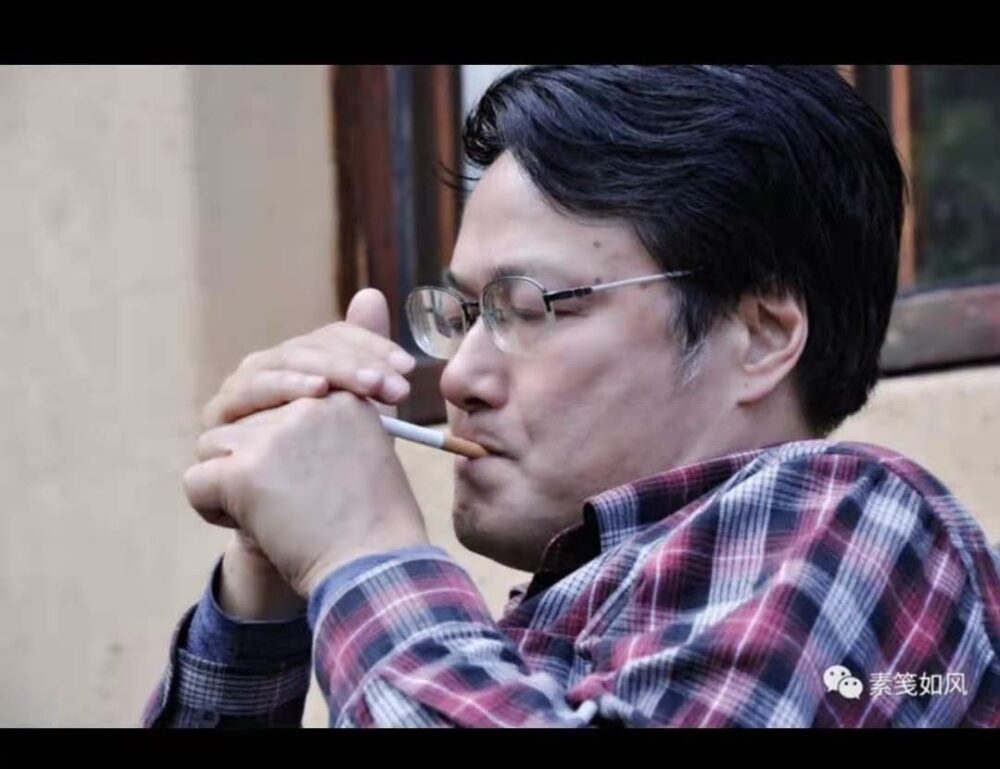
Author Biography: Jiang Yibin is a contemporary writer from Shaoyang, Hunan. He is the honorary chairman of the Hunan Writers Association. His works include the full-length novels "Left and Right Neighbors," "Fire Carp," and "Wine Song," as well as short and medium-length story collections such as "Kiln Sacrifice" and "Lonely Lights," among over twenty other publications.