A Poetic Heart Like the Bright Moon – Impressions of Li Shaojun's Old-Style Poetry
Li Xiaoye
Li Shaojun writing classical-style poetry is an iconic event. As the editor-in-chief of Poetry Monthly, his writing of classical-style poetry is not just a personal hobby, but also represents a shift in poetic style, a turning point from new and classical poetry.“Centennial Reconciliation”In that context, classical Chinese poetry finally returned from the periphery to the mainstream, ascending from remote villages to the halls of high culture. Therefore, Li Shaojun's classical Chinese poetry writing not only injected strong momentum into the reconciliation of old and new styles of poetry, but also once again led the trend of contemporary poetry development.
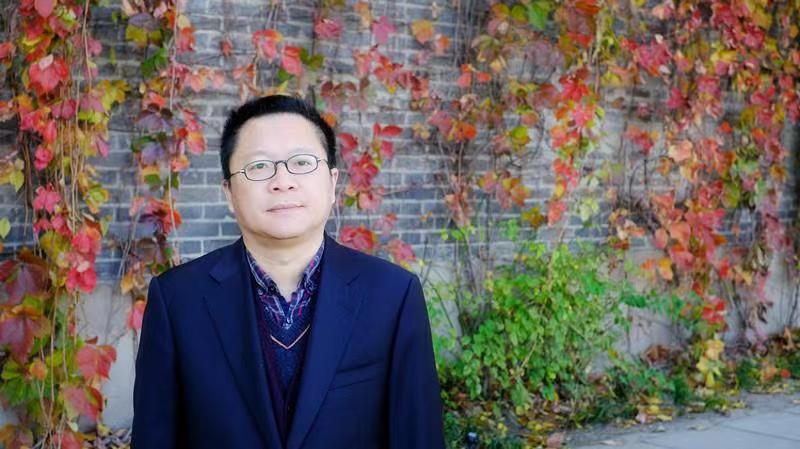
Poet Li Shaojun
In today's poetry scene, Li Shaojun is remarkable for his ability to break conventions, escape clichés, and make bold shifts with exceptional keenness and decisiveness. Broadly speaking, his poetry career has seen two major turns. The first was from the West to the East. He is perhaps the earliest and most self-aware poet to turn toward Eastern aesthetics. In an era dominated by modernist and postmodernist thought, he resolutely turned East, seeking poetic meaning and inspiration within Chinese traditional culture and exploring the contemporary transformation of traditional poetics. The second turn was from modern poetry to classical poetry.2023In the spring of the year, at Beijing's Dongyue Temple, Poetry Magazine held“Dongyue Gathering——New and Old Poetry: A Century of Dialogue and Reconciliation”The event featured attendees discussing the present and future of classical and modern poetry in the new era. Despite ongoing disagreements, he resolutely chose to embrace“Reconciliation”and put it into practice. Since then, his old-style poems have come in one after another, astonishing in their quantity and quality.
An excellent poet never remains in their comfort zone, but tirelessly seeks breakthroughs. Li Shaojun's every turn is not a simple abandonment of the old for the new, but a continuous ascent from the previous step. As the steps rise, the vision broadens, the heart and mind grow more expansive, the content becomes richer, and the style more diverse, like a trickling stream flowing into rivers, flowing into the ocean.
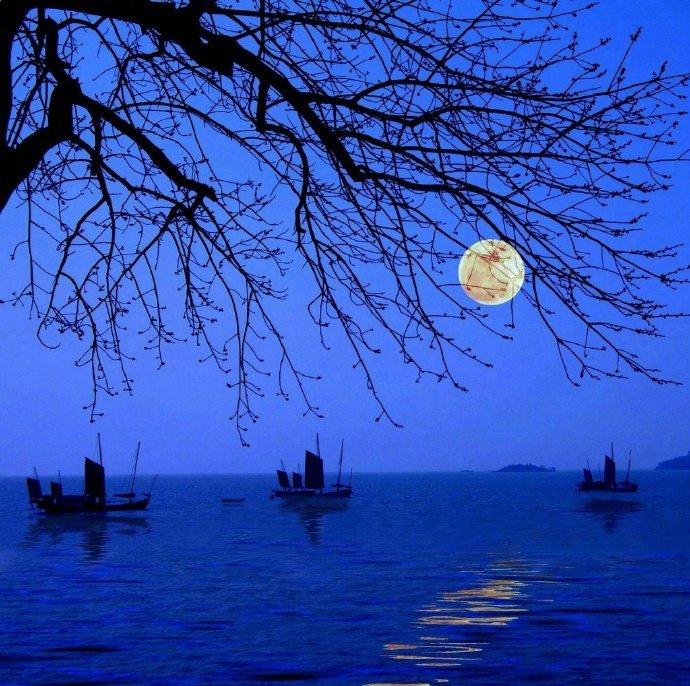
The reason why he can continuously explore and innovate lies fundamentally in his true poetic heart.“My heart, like the bright moon, is full of poetry.”This is not only the original intention of his poetry writing but also the pursuit of his entire life. It is precisely by embracing a poetic heart as pure as the moon, abandoning worldly desires, and remaining unmoved by the mortal world, that he can reach the supreme realm of the unity of man and poetry and the mutual verification of man and poetry through his arduous pursuit of poetic ideals.
And his two stylistic shifts are inseparable from his classical Chinese poetry writing. His classical Chinese poetry writing began in his youth, and even after he became famous for his modern poetry, he continued to diligently write classical poetry. It wasn't until the trend of reconciling classical and modern poetry emerged that people could get a glimpse of it. It is precisely this profound accumulation of traditional culture in his classical Chinese poetry that has allowed people to understand the deeper reasons behind his two shifts.
Overall, Li Shaojun's classical poetry is not only rich in content, diverse in style, and strict in meter, but also high in ambition, sincere in emotion, and distinct in personality.
His poetic ambition is lofty.1985During my time studying at Wuhan University, my piece "First Ascent of the Yellow Crane Tower" wrote:“Plum blossoms on the riverbank scattered by a flute's song, a youth chases a hawk on a platform. Singing wildly, he doesn't notice the east turning white, a great road opens at the Yellow Crane Tower.”showing the young Li Shaojun's longing and yearning for the future, with a broad artistic conception and extraordinary momentum, possessing20century80A bright atmosphere characteristic of the era.DeepSeekReview:“Rereading this work from our youth, we can still feel1980The unique warmth of the poetry of that era, the heat that burst forth as a generation of young poets chiseled through the ice with words, shimmering with a unique idealism.”Similar works include“The Lian River flows into the great river, a melancholy young man. When will he chase the waves ahead, and follow the phoenix with a strong wind?”(Ballad of Lianshui)“Cruising Park Road, youth ventures out together. Singing at the crossroads, daring to head for the sea.”(Saga of the Sea Journey), etc., overflowing with heroic ambition, vibrant with youthful spirit, and distinctly marked by the characteristics of the era and individual personalities.
Its poetic sentiment runs deep. Li Shaojun wrote in his "Theory of Poetic Expression of Emotion":“Poetry is the textualization of emotion, or rather, emotion textualized.”“All experiences that can be remembered are emotional experiences. Without emotions, memories are like smoke passing before one's eyes, unable to become experiences etched in one's heart.”Indeed, if you can't move yourself, how can you move others? He is a man of deep emotion and loyalty, whether it comes to love, family, hometown ties, or friendships. The ancients said:“Saints forget emotions, the lowest cannot reach emotions, and where emotions are deeply felt, that is precisely among us.”A New Account of Tales of the World·"The Eternal Regret"“Infatuated”That's where his traditional poetry is moving.
Remembering Grandmother
On a winter night by the fireside, remembering my grandmother, how fortunate I was in my youth to be so well-cared for.
Roasting a fur coat by the fire before bed, warmth remains to this day, unafraid of the cold.
Childhood warmth, unforgettable to this day, reading it carefully, full of family affection, as long as the surging river.
"A Record of Xiangxiang No. 2 Middle School"
The plum blossoms at Xiang Temple herald a new year, and the bright moon hanging in the sky reminds me of my distant home.
A silent encounter, watching the rippling water, thirty springs have swiftly passed.
The affection between teachers and students, and the love among classmates, have become memories as I return to the capital. Revisiting these old places evokes boundless emotions.
To Brother Shan
Our generation chases after Tang and Jin, acting with our true, most sincere nature.
Indifferent to the worldly pursuit of fame and fortune, I only seek freedom and an unfettered heart.
Wander without fixed abode across the world, able to enter the mortal realm and remain pure.
Understanding the earthly delights, where there is Brother Shan, there is wisdom.
In just a few short lines, Brother Shan's true feelings and genuine character leap off the page. Only those who know him deeply could achieve this.
Confucius said: "Virtue is not solitary; it will surely have neighbors." Because he was sincere in treating people, he had many friends, and friendships invariably involve poetry. When friends gather for banquets, intimate conversations, or travels, it is often difficult to express these experiences in new poetry, making classical Chinese poetry a readily manageable tool. Works like "To Mr. Xie Mian," "To Brother Chen Xianfa," "To Teacher Shu Ting and Chen Zhongyi, Remembering Our Trip to Pinghai Ancient City," "Passing Urumqi, To Brothers Liu Liangcheng and Shen Wei," "To Brother Ouyang Jianghe," "To Brother Zhang Qinghua, Remembering Our Trip to Jiangnan," and "To Friends in Sanya" have become a major category of Li Shaojun's classical Chinese poetry. His earnest heart and profound affection are deeply moving.
His poetry is a record. How to resistArtificial IntelligenceTo come, Li Shaojun summed it up in one sentence:“Write your personal history well”Compared to modern poetry, classical poetry is easier to write.“Personal History”Many ancient poets treated writing poetry as a diary. Du Fu was later called“earliest diary poet”Bai Juyi, in particular, was the poet of the Tang Dynasty who created the most diary-style poems. Li Shaojun was clearly an ancient“Diary poem”The authentic successor, his classical Chinese poetry faithfully records the emotions, life, work, and career of each stage of his life.
《1988《Beijing Suite, and Presented to Friends Yuwen, Xidu, Zidi, Zhang Renhao, etc.》 was written in the last century80A group of old poems written in his [early/youthful] years genuinely record his past experiences of visiting the capital, attending academic lectures, and meeting friends. These life details, unseen in his new poems, vividly portray his sincere and uninhibited personality.
In the epigraph, he wrote:“1988During the summer vacation, I visited Beijing for the first time and stayed at Peking University's Chinese Department.86For nearly two months, I have been staying at Comrade Zhang Renhao's dormitory, making friends through poetry, and engaging in visiting and academic exchanges. Now, as I revise and organize my old works, I am filled with emotion.”
Late-night Drinking at Weiming Lake
Youth is too lyrical; I sit and watch the morning star.
Drank all night, empty bottles by the lake.
All Night Chat with My Hunan Fellow Villager
Traveling north to seek friends, in Yanjing there are many wild spirits from the south.
Sharing silent words with my pillow under the clear night sky, the room fills with lingering fragrance.
Missed the night bus, stayed overnight in a construction shed, and received a gift of watermelon.
My capital night train was lost, I stayed overnight at a bean shed with a worker.
The cicadas chirp loudly during the Great Heat, and watermelons increase internal energy.
A Record of the Front Gate Inn
In early summer, I stayed at an inn and studied the map all night.
The gatekeeper complained about the electricity usage when the lights were turned off at 10 o'clock.
Riding a Bike to Beijing North
Passion flows, riding to the North City.
As poetic inspiration arises, the song carries forth throughout the journey.
In the turbulent and passionate years of poetry in the last century, a vivid image of a young poet, supremely sincere and enthusiastic, leaps forth from between the lines, like a montage.
When Li Shaojun was running the journal "Tianya" in Hainan, he traveled all over the country to solicit contributions, so the landscapes and natural scenery in his classical Chinese poems are closely connected with his professional work. After serving as the editor-in-chief of "Poetry Magazine," he actively organized various poetry activities, advocating for the cause of poetry while also writing eloquently about the beautiful rivers and mountains.“I can recognize the brilliance of your poetry, it lies within the journey through mountains and along rivers.”Lu You's poem is perfectly suited for him. At the beginning of this year, he went to Ruian, Wenzhou, to participate in a poetry event and wrote two poems upon his return.
Visiting Lucheng, Wenzhou
Seeking bamboo and Zen in the Yan Dang mountains, rock flowers and stream moon nourish the spirit.
Exploring the jade sea to uncover profound mysteries, fish leap and kites fly, revealing new deer trails.
Tea Mountain Residence
Beside springs, rocks, and streams is a good place to reminisce; warmed by the winter sun, wine and fragrance blend.
As the year ends, thoughts turn to home far away, Counting red plum blossoms east of the small courtyard.
Li Shaojun is busy. He's busy writing and appreciating poetry, as well as compiling and editing anthologies. He's busy nurturing young poets and hosting fellow poets from various circles. He's busy connecting with tradition and communicating with overseas counterparts. He's busy with the construction of poetry theory, busy organizing poetry events, and busy responding to the internet, audio-visual,Artificial IntelligenceThe challenge of writing poetry……He has been busy, constantly walking on the path of poetry. His life and work revolve around poetry, and he has poured his heart and soul into the cause of contemporary Chinese poetry, contributing his bit. Reading his new poems reveals a poet's arduous pursuit of poetic ideals; reading his old poems shows a poet and poetry editor's silent dedication to the cause of contemporary poetry.
What's fascinating is that while creating new poems, his classical poems were also quietly recording the trajectory of his life, inadvertently constructing a unique poetic image and showcasing a richer poetic life. Today, when he opens yellowed notebooks from the depths of his drawers to sort through those unpublished old works, he'll suddenly realize: while continuously writing new poems, his classical poems were also secretly completing the record and writing of his poetic career.
(Originally published in China Publishing Media Commercial Daily)2025年4月10Japan
Author Introduction: Li Xiaoye, formerly studied in the Chinese Department of Peking University. She has served as Editor-in-Chief of China Books Publishing House, President and Editor-in-Chief of "Media" magazine, Editor-in-Chief of "Publishing and Distribution Research" magazine, and Director of the Media Research Institute of the Chinese Academy of Press and Publication, etc. She is mainly engaged in publishing and media research. She was selected as one of the third batch of leading talents in the national press and publication industry. She is a postgraduate supervisor at the School of Publishing, Printing and Art Design of University of Shanghai for Science and Technology. Her works have appeared in "Poetry Journal," "Chinese Fu," "Chinese Poetry," "Guangming Daily," and other publications.