Deconstruction of the Concept, Development History, and Contemporary Characteristics of Avant-garde Literature
The term "vanguard" first appears in the ancient Chinese historical text *Records of the Three Kingdoms: Shu: Biography of Ma Liang*, where it is used as a military term to refer to the advance guard in military operations. In other countries, however, it is generally believed to have first appeared in 18th-century France.
“The term ”avant-garde" is also used to refer to the vanguard of an army.
By the 1830s, this term was borrowed and became a popular political science concept among utopian socialists, as English and French utopian socialists like Fourier, Owen, and Rodbertus constructed an ideal social system and conditions that were ahead of their time. The association of the term “vanguard” with utopia undoubtedly implied its incompatibility and rebelliousness with the status quo (or tradition). In the 1870s, with the rise of early Symbolist poetry and the subsequent popularity of modernist thought, the term entered the literary and art world, specifically used to describe emerging modernist writers and artists. Therefore, for most writers and critics, the term remained very inclusive until some scholars collectively referred to movements and schools of the 20th century such as Dadaism, Futurism, Surrealism, and Expressionism as ‘historic avant-garde,’ distinguishing them from a few modernist artists. The “avant-garde” in contemporary literary studies can be summarized by Chen Sihe in his article “The ”May Fourth“ Literature Between Avant-garde and Popular Culture” as literature that, in contrast to normative literature, uses a radical literary attitude to create a schism and deconstructive impact with society, which is the "avant-garde."
Tracing the origin of the term “vanguard” reveals it to be a word with multiple embedded meanings, conveying groups (factions) or concepts (viewpoints) rich with metaphorical possibilities that express ideas or feelings such as “progress,” “precursor,” “avant-garde,” “adventure,” and “freedom.” It has undergone a long evolutionary process, infiltrating from the military realm into social, literary, and cultural fields. As a fluid concept, “vanguard” is directly and closely linked to the specific historical moment and cultural context in which it exists.
At the same time, it is certain that, as Hong Zhigang pointed out in his article “Focus on Avant-Garde Literature in the 1980s - Eternal Avant-Garde,” “As long as literature is alive, the avant-garde will not die,” merely appearing in different forms and with different connotations. In short, as long as society progresses, the "avant-garde" will stand at the forefront of society, acting as a catalyst to promote social and literary progress.
II. Deconstructing the Concept of Avant-Garde Literature
Despite the lack of a unified definition for avant-garde literature to this day, its profound influence on contemporary literary history has led countless experts and scholars to continuously research it. Avant-garde creation can be said to be a rebellion against the classic realist writing formula, establishing the authority of technicalism in writing approaches and igniting a wave of individual creation in the new era. Hong Zhigang points out that avant-garde literature is not limited to the aesthetic paradigm of a particular literary school, but rather refers to a dynamic, experimental literature that is always at the forefront of the times; it is an aesthetic trend that is never satisfied with the status quo of creation, constantly deconstructing and destroying concepts of artistic autonomy. Cheng Guangwei summarizes that “contemporary avant-garde literature” was recognized by the literature of the 1980s as a new image that broke free from non-literary factors to achieve “literary autonomy.” In the narrative of literary “evolutionism,” it officially appeared with the posture of “formal revolution,” becoming a recognized “common sense” in literary history textbooks.
Contemporary Chinese avant-garde literature has been deeply influenced by Western avant-garde literature.
After the 18th century, books became an important medium and channel for the popularization of information technology and the communication of Chinese and Western cultures. A stream of serialized literary translations, such as “Collections of Research Materials on Foreign Literature,” “Series of Foreign Literary Theories,” “Series on Western Philosophical Schools,” and “Series of Aesthetic Translations,” poured in. Philosophical currents such as Sartrean existentialism, Freudian modern psychoanalysis, and the vitalism of Schopenhauer and Nietzsche, as well as the aesthetic thoughts of Croce and Santayana, also had a significant impact on the Chinese literary scene.
Among them, Jorge Luis Borges had a more profound influence on contemporary avant-garde writers, earning him the title “writers” writer.“ His influence is reflected everywhere in the works of contemporary avant-garde writers, whose creative concepts and techniques are deeply impacted by Borges's ”labyrinthine world,“ constructed from his contemplation of ”time,“ ”cycles,“ and ”dreams."
We can see a labyrinthine world constructed through time in works such as Yu Hua's “This Text is Dedicated to the Young Girl Yang Liu,” Sun Ganlu's “Visiting Dreams,” Ma Yuan's “The Temptation of Gangdise,” and Ge Fei's "The Lost Boat." In addition, Franz Kafka, and the avant-garde representatives Can Xue and Yu Hua, whose creations are called Kafkaesque, and Gabriel Garcia Marquez, who won the Nobel Prize in Literature in 1982, whose narrative style of temporal cycles of "past," "present," and "future" runs through his literary works, have also had a tremendous impact on the avant-garde's creative endeavors.
III. Deconstructing the History of Avant-Garde Literature
Contemporary avant-garde literature emerged in the early 1980s, flourished in the mid-1980s, and concluded in the 1990s with historical inevitability.
A short but brilliant history, yet it left a strong and colorful mark on contemporary literary history.
(1) The Emergence of Contemporary Avant-Garde Literature
In the 1980s, when China's reform and opening-up policy was gaining momentum, themes such as “seeking novelty, seeking innovation, reforming tradition, and going global” became the main tenets of the era. At that time, the Chinese people, having rejected the personality cult and ridiculed authority, were in a state of confusion, beginning to deeply question the underlying essence of their own existence. Against this backdrop, avant-garde literature, through the fragmentation of structure, the downplaying of plot, and the disjointedness of reality, deconstructed the totality of the world and the authenticity of existence with its unique narrative style and metaphorical thinking and expression. It also deconstructed the traditional meaning, depth, and themes of writing.
Avant-garde literature immediately garnered public attention and was favored by young literary writers.
(II) The Flourishing of Contemporary Avant-Garde Literature
With the growing demand for cultural consumption, avant-garde literature has achieved explosive development.
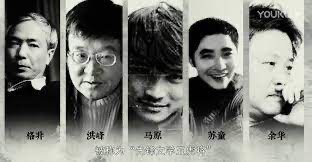
Marked by the publication of Zaxi Dawa's and Ma Yuan's short stories "Mysterious Twilight" and "Goddess of the Lhasa River" respectively in *Tibet Literature* in 1984, avant-garde literature rapidly developed, with the subsequent release of novels such as Ma Yuan's "Temptation of Kangdisi," Yu Hua's "A Kind of Reality," Liu Suola's "You Have No Choice," Mo Yan's "The Transparent Carrot," Sun Ganlu's "I Am a Juvenile Wine Jar," and Can Xue's "Cabin on the Mountain."
The need for cultural consumption and avant-garde writers' confrontation with existing artistic paradigms, linguistic orders, authoritative discourses, and conceptual ideologies have captured the public's attention.
We can use Chen Xiaoming's evaluation and affirmation of avant-garde literature in “Unlimited Challenges—The Postmodernity of Chinese Avant-Garde Literature: Preface” to illustrate this point. He believes that avant-garde novels "rewrote the definition of the novel and changed people's ways of feeling and reading."
(III) The Demise of Contemporary Avant-Garde Literature The emergence, development, and demise of things are immutable laws of development.
Patterns are the same for avant-garde literature, but it has experienced a brief but glorious history.
The historical inevitability of the demise of contemporary avant-garde literature. In the early 1990s, due to the historical context, cultural changes, and other reasons, contemporary avant-garde writers, after gradually deviating from or abandoning their original rebellious spirit and confrontational qualities, began an extremely complex internal transformation. Hong Zhigang, in his article “The Sorrow of Displacement: Facing the Avant-Garde Literature of the 1990s,” describes: "The avant-garde failed to seize the historical opportunity and, with a sense of abandonment, after being neglected, gradually became involved in social hot topics, causing the once vigorous avant-garde literature to inevitably fall into a state of displacement in recent years." Coupled with the inherent contradictions in the development of things, avant-garde literature, which was non-mainstream, gradually evolved into mainstream literature through rapid development. It flourished and then declined, hence its demise is historically inevitable.
2. The shift in creative methods of contemporary avant-garde literary writers. Avant-garde literature in the 1990s underwent a certain transformation, gradually moving towards realist creative norms with a focus on the return of plot, the return of narrative methods, and the return of traditional values. Works such as Yu Hua's "To Live" and "Chronicle of a Blood Merchant" show his comprehensive return to tradition; others went into obscurity, with no new works appearing, such as Sun Ganlu; some turned to theoretical research, such as Ma Yuan and Ge Fei; ultimately, only Can Xue persisted with her absurd writing style, but the tide of avant-garde literature had already passed.
IV. Deconstructing the Salient Characteristics of Contemporary Avant-Garde Literature
The reason why pioneering literature could flourish must be due to its distinctive features.
The prominent characteristics of avant-garde literature include: narrative techniques that interweave time, fragmented deconstruction of the form of world existence, in-depth questioning of the latent essence of human existence, and the reconstruction of conceptions of time and consciousness of being. These are achieved through innovative narrative principles and creative methods such as labyrinthine narration, a turn in narrative toward language itself, the setting up of multiple texts within novels, the interpenetration of events in time and space, and the displacement and re-ordering of reality and illusion. In terms of creative thinking, it employs subversion, irony, and alienation, no longer adhering to the moral norms of fiction or the pursuit of ultimate values. Instead, it provokes intense doubt about one's own state of existence through mockery of the real living environment and scale of values, thereby stimulating deep skepticism about the latent essence of human existence, subverting and dissolving original modes. The emphasis on the independence of personal narrative is highlighted through characteristics like the prominence and blurring of personalized narration, yet ultimately, it cannot escape historical penetration within the text. In terms of aesthetic features, avant-garde writers' pursuit of change and innovation ultimately challenged and subverted traditional aesthetic norms and consciousness to fulfill their creative needs. However, it is precisely these bold attempts that have led to a revolution in literary aesthetics, enabling it to maintain a strong creative momentum and create infinite creative prospects within a relatively short period.
Calinescu summarizes the changes in aesthetic norms and consciousness in Five Faces of Modernity as follows: “The rejection of the past and the cult of the new determined the aesthetic program of these new schools.”
This paper will deconstruct the most salient characteristics of modernist literature—the reconstruction of the concepts of time and space, and the consciousness of existence—in a more detailed manner.
The Intertwined Use of “Past,” “Present,” and “Future” In contemporary avant-garde literary works, authors attempt to break free from the constraints of time on existence during narration. They often employ “fragmentation, repetition, and displacement” to transform physical time into psychological time, seeking to access life's existence from multiple perspectives. For example, Yu Hua's work “Repeating Time” emphasizes the cyclical nature of time, while “Inescapable Calamity” highlights the formation of specific, enclosed, self-revolving temporal paradoxes within the distinct time segments of “past,” "present," and "future" of the narrated events. Sun Ganlu's work "Asking Women to Guess Riddles", on the other hand, shatters the continuity of time. Ma Yuan, in critiquing his own work "Three Times of Life in Lhasa," states that the protagonist of the story is not the characters within it, but time itself.
(2) Deconstructing the essence of the world through fragmented descriptions. In contemporary avant-garde creations, various novel details form scattered images that intersect and overlap. Through this fragmented form, the world is deconstructed into a variety of scenes and images. These fragments do not follow any logical order but are arbitrarily arranged according to the author's narrative psychology and creative needs. For example, in Can Xue's work "The Aging Clouds," the overall narrative structure is completely rejected. Through scattered sentences, fragments of human relationships, the separation between people and society, and complex inner monologues, the absurdity of human existence and the existence of the world is presented.
(III) An exploration of potential existential crises. In the creative works of contemporary avant-garde artists, whether through the interweaving of time, disrupting the chronological order of events in narration, or deconstructing the world in fragments, the ultimate aim is to contemplate the value of existence through the text.
Yu Hua's "No Way Out" everywhere reveals a sense of fate regarding existence and destiny; Can Xue's "Aging Floating Clouds" presents a surreal landscape of survival; Sun Ganlu's works more often embody doubt and anxiety about existence and death, as seen in his work "Breathing," which is completely immersed in his own questioning of the authenticity of existence and his contemplation of death.
V. Conclusion
Before the emergence of avant-garde literature, our literary creation primarily served politics. Avant-garde literature, with its unique narrative methods, broke traditional literary norms. Centered around the theme of profoundly questioning the latent essence of human existence, it deviated from linguistic expression within texts and put an end to the literary trajectory of serving politics before the mid-1980s. Avant-garde literature sprouted amidst the wave of reform and opening up. Its creation was deeply influenced by foreign avant-garde literary creation techniques, such as the works of Western avant-garde literary masters mentioned in this article, like Kafka and Jorge Luis Borges. This indirectly reflects the integration of Chinese literary creation with Western literary creation, simultaneously enriching the domestic traditional literary creation field and leaving behind many innovative ideas for contemporary literary creation. For instance, the innovative viewpoint that literary works exist not for the reader but for literary history, and many other such innovative ideas, subverted traditional literature.
References:
[1] WANG Ning. Tradition and Avant-garde, Modern and Postmodern—The Artistic Spirit of the 20th Century [J]. Wenyi Zhengming, 1995(1).
Chen Sihe. “May Fourth” Literature: Between Vanguardism and Popularization [J]. Fudan University Journal, 2005 (6).
[3][4] Hong Zhigang. The Focus of Avant-Garde Literature on the Eighteenth - Eternal Avant-Garde [J]. Novel Review, 2002 (6).
[5] Cheng Guangwei. Re-evaluating “Avant-garde Literature” [J]. Literature and Art Studies, 2005 (10).
[6] Chen Xiaoming. Violence and Games: Discourse Without a Subject [M]// Yin Guojun. Vanguard Experiments – Chinese Vanguard Culture in the 80s and 90s. Beijing: Oriental Publishing House, 1998: 73.
[7] Hong Zhigang. The Sorrow of Being Out of Place: Confronting 1990s Avant-Garde Literature [J]. Mountain Flower, 1995(12).
[8] [U.S.] Matei Calinescu. The Five Faces of Modernity [M]. Beijing: Commercial Press, 2002.
[9] Huang Fang. A Reflection on the Avant-Garde Nature of Chinese Avant-Garde Literature [D]. Shanghai Academy of Social Sciences, 2007.