Fu Haoyong's Essays: Cycling Three Thousand Miles Home
Fu Haoyong
An elder returning home, a torrential snowstorm froze them on the way, the memory of that cold seemed to take root. The cold wind, like a knife, cut apart the road home; the freezing rain, like arrows, pierced the hearts of the wanderers. The wheels spun on the icy road, the roar of the engine sounding particularly powerless in the wind and snow. Inside the car, they wrapped themselves tighter in their cotton clothes, their eyes filled with anxiety and anticipation.
They counted the days, using their fingers to calculate the time until they could go home, but they never expected that this sudden snowstorm would turn their journey home into an endless wait. On the eighth day, when the roads finally showed signs of clearing, they had to face reality – the holiday was over, and the call of the work site could not be delayed.
Turning the car around, moving further and further away from home, the sadness and reluctance in their hearts turned into a sigh. The wind and snow continued, the journey home was long, and their feet once again stepped onto foreign soil.
This year, with a long way to go before the year ends, the factory grounds are eerily deserted. The machines are silent, and the human voices are few. Orders have completely dried up. The factory gates were shut, heavy and final, more than a month ahead of schedule. Someone, in a corner of the cafeteria, muttered, “Let's go home.” The voice wasn't loud, but it was like a stone dropped into a stagnant pond, sending out dull ripples in all directions. A low chorus of agreement followed.
And so, while the sky was still grayish and dim, thirteen three-wheeled motorcycles, laden with piles of luggage and bundles, carrying silent women and groggy children, their engines laboring with dull, sputtering gasps, formed a crooked, winding snake, rolling over the frozen, rock-hard earth, and slowly drove away from the city that now held only empty factory buildings and cold iron beds.
In years past, this time of year at the factory gate would present a different scene: shuttle buses laden with belongings strapped to their roofs would line up, heads popping out of windows, excitedly discussing whose wife just had a baby, whose cured meat was best, and which day they’d be back after the New Year. The air buzzed with hot anticipation. Back then, boarding the bus felt lighthearted, like a brief separation, with the promise of returning to this familiar place after the break, to continue a life that was difficult but had a foreseeable end. This time, however, the roar of the engine felt unusually monotonous and heavy. There were no laughs, no promises of return dates, only the rustling of luggage against the truck bed and the swishing of tires on the road, a dull weight pressing down on every traveler's heart. Next year? Where would next year be? No one knew, dispersing aimlessly in the cold wind like dust kicked up by the wheels.
Leading the way was Achuan, in his early thirties, with a hazy look in his eyes. Before setting off, he took the change everyone had chipped in and bought a brand-new "Atlas of China's Highway Transportation" from a roadside stall. His hands, with their thick knuckles and fingernails permanently grimy with oil, pressed down on the smooth map pages. His index finger traced a winding red line, starting from Guangdong, heavily crossing the provincial border into Guangxi, then laboriously navigating the tangled and spiraling mountain markings of Guizhou, before finally settling on a small dot in the heartland of Bashu... He carefully folded the map, its edges immediately showing rough creases, then wrapped it meticulously in a transparent plastic bag and tucked it into the interlayer of an old tool bag deep in the bed of his truck.
The convoy crawled along the national highway. The engines droned monotonously, rumbling over the smooth asphalt and jolting over sections of exposed gravel and potholes. The people inside the vehicles were huddled, wrapped in every piece of clothing they could find to ward off the bone-chilling wind. It was silent all the way.
In past years, around this time, it would have been a hullabaloo inside and outside the cars. The men would be loudly discussing the new pigsty built at home, the women comparing the clothes and shoes they brought for the elders and children, and the children would be chattering about the potential amount of New Year's money they'd receive. At night, when parked by the roadside, men bundled in military overcoats would gather, sharing salted vegetables and peanuts, passing around small wine cups, exchanging the hardships of the past year and the joy of returning home. Their rough laughter could pierce the cold, silent night sky. But right now, only the wind, the engine, and the wheels weave together an icy melody. Those sleeping in the corners of the truck bed at night were as silent as stones.
It's not that they couldn't afford a crowded train ticket. It's that they couldn't bear to part with their clumsy, worn-out belongings, which held all the imprints of their lives and humble livelihoods in a foreign land. The sidecars and backseats of every three-wheeled motorcycle were crammed full, bulging, and repeatedly bound with rough twine, wire, and rubber bands, leaving deep indentations. The three-wheeled motorcycle itself, their means of hauling goods and carrying passengers to earn a living, had now become the most cumbersome burden, dominantly occupying most of the sidecar's space. Several old thermos flasks, their enamel mostly chipped and bodies dented from bumps, were wrapped in layers of clothing and carefully tucked into the gaps. One of these, a green thermos with a particularly large inner bottle, was among the dowry items that A Chuan's wife had brought from her hometown last year.
Achuan's wife had once grumbled that the old inner flask of the thermos was unstable. Achuan always said, “As long as it keeps warm, it saves money.” A few small stools with peeling paint, revealing their pale gray wood grain, and a few red bricks used as cushions were firmly tied to both sides of the bike frame. The most eye-catching part was the top of Achuan's bike's cargo box. He had covered it tightly with a thick gray tarpaulin, but the corners of the cloth were relentlessly lifted by the wind, stubbornly revealing an unusually bright and striking red – it was a brand new, thick wedding comforter, blooming with golden peonies on a large red background and printed with a huge "double happiness" character.
Last December, Achuan held his wedding ceremony in his hometown. The sound of firecrackers still seems to echo in my ears. This quilt was made by Achuan's mother with money saved from eggs for half a year. She specifically bought the best fabric and hired the most famous seamstress in the village to make it. His wife has been reluctant to use it, saying they should save it for when they move into their new house. This time, when leaving the factory, his wife was willing to cut back on everything else, but she quietly took out this quilt from the bottom of her bundle, carefully folded it, and personally tied it tightly to the highest point of the car roof with rope. That striking, festive red, against the backdrop of the gray convoy, the lead-colored sky, and everyone's somber mood, appeared especially solitary and stubborn. It was like a silent declaration, and like a huge question mark. It carried the anticipation of a new life, and also reflected the heaviness and uncertainty of reality. The cars were all heavy, the engines roared with effort, and thick black smoke billowed out from behind when climbing, their speed so slow it made one anxious.
Two weeks of wind and rain, frost and sun. The wheels turned tirelessly, honestly grinding over three thousand arduous miles. The wind had carved deep marks on each of their faces. Oil, mud from the road, and sweat mixed and solidified on their clothes, hair, and faces, each person encased in a thick layer of grime, like moving clay figures. The colors of their clothes had long been obscured by dust and dirt, hardening into shells.
Finally, as the convoy puffed and panted, laboriously cresting a familiar mountain ridge pass. As soon as they stepped onto Bashu territory, the land beneath their wheels seemed to quietly become soft and welcoming. The familiar texture of winter terraced fields and the rolling contours of the hills slowly unfurled in the thin morning mist. A faint, unidentifiable scent, a mixture of damp earth and wood ash, seemed to drift in the air – the unique smell of home. Familiar accents began to truly enter their ears. The tone of the shopkeeper on the roadside calling out to customers, the brief questions and answers exchanged between old farmers across the field ridges, those familiar rolled "r's" and final tones, like keys for a long-awaited reunion, gently knocked on the sealed doors of their hearts.
This afternoon, the sky was as gloomy as waterlogged old cotton wadding. The convoy stopped at a fork in the road near a village to rest, to add water to the scalding hot water tanks, and to let their tired bodies lean briefly against the cold truck beds. The engines sputtered out one by one, and the monotonous roar vanished, plunging the surroundings into a strange, suffocating silence, broken only by the whimpering of the cold wind whistling through the bare tree branches.
A留守老农, wrapped in a slightly worn, thick cotton-padded jacket and carrying a hoe, ambled slowly along the field path. The peculiar convoy, packed as if for a family migration, caught his eye. He walked over to A Chuan's vehicle and stopped—the bright red quilt, impossible to hide, was like a flag. He tilted up his deeply lined face, squinted his cloudy eyes, and painstakingly examined the “little mountain” built from various discarded household items in the truck bed. His gaze swept over the tied-up stools, the thermos bottle wrapped in a bundle (he might have glimpsed the large green glass liner), and finally settled on the corner of the new wedding quilt, stubbornly exposed and burning red. With a heavy local Sichuan accent, he asked, not loudly, with pure bewilderment, “Bringing so many things, are you moving?”
A Chuan squatted by the car, fruitlessly wiping mud splashes on the side of the truck bed with a tattered cloth of indeterminate color. At the sound of the question, his hand movements abruptly froze, and the rag silently drooped onto the muddy surface of his shoes. His companions, who were moving their stiff joints and unscrewing radiator caps on nearby vehicles, also seemed paralyzed, turning their heads in unison, their gazes fixed on the old farmer and A Chuan.
The air solidified, heavy enough to create dents. A Chuan slowly, somewhat laboriously, straightened up, gripping the cold handlebars to steady himself. His hair, windblown into a tangled mess, and his unshaven face were etched with the deep marks of dust and bone-deep exhaustion. Something caught in his throat, like a hard lump. He cleared it with a forceful, dry cough, loosening his thick phlegm. Then, with the same hoarse yet exceptionally clear accent from his hometown, he replied, “No!” He paused, his chest heaving violently, as if gathering all his strength. He raised his bloodshot eyes, looking over the stooped shoulders of the old farmer, towards the misty, familiar yet somewhat strange depths of the fields in the distance, his voice suddenly rising, with an almost tragic emphasis: “It's going home!”
“The moment the words ”going home" slipped out, Achuan's bloodshot eyes, deeply sunken in their sockets, suddenly widened. The rims of his eyes rapidly turned red, moist, and filled with tears at a visible pace. Immediately after, tears, without any warning, surged out like a dike breaking, large, heavy drops rolling down his dust-covered cheeks, carving two clear, muddy gullies.
Beside him, in the truck bed, his wife, who had been tightly holding their sleeping child (the child wrapped in an old blanket, his little face flushed red from sleep), suddenly buried her head deep into the swaddling clothes. Her thin shoulders began to shake uncontrollably and violently, trembling silently. Next to her, a tall, strapping man driving the vehicle abruptly turned his face away, his rough, dark hands fiercely and repeatedly wiping his equally dusty face, emitting suppressed, short gasps through his fingers.
More people, whether they were men gripping the handlebars, driving silently, or women curled up in the corner of the truck bed with vacant expressions, their faces weathered by wind and frost, disheveled, tears flowed down like a breached dam, surging, silently. Tears mixed with the dirt on their faces, forming a murky paste that flowed unchecked. No one wiped them away, and no one wailed, only stifled sobs from deep in their throats and rapid, heavy breaths rose and fell in the cold wind, weaving into a heartbreaking silent symphony. Each person wept profusely.
The entire caravan was completely engulfed by a massive, silent torrent of bitterness, grievance, exhaustion, profound homesickness, and utter uncertainty about the future. Even the high-up red quilt seemed to tremble slightly in the cold wind. The old farmer, carrying a hoe, stood rooted like a stake, his eyes widening in astonishment as he watched this group of disheveled, suddenly tearful returnees.
The shoulder that carried the hoe sagged unconsciously, the wrinkles on his face became more deeply furrowed, and his lips moved several times, but no sound came from his throat. In the end, he simply sighed silently and heavily, turned around wordlessly, and carrying the old hoe that had accompanied him for many years, he walked step by step, slowly, along the silent, cold ridge he had come from, back into the gray mist in the depths of the winter fields, his figure growing increasingly blurry.
The low rumble of the engine reigniting and starting up broke the stagnant sorrow like a heavy sigh. The convoy began to crawl again, heading home, towards the heart of Bashu, continuing their slow and arduous final journey in the damp, cold air. The splash of red on top of the truck bed, against the somber background, remained glaring.
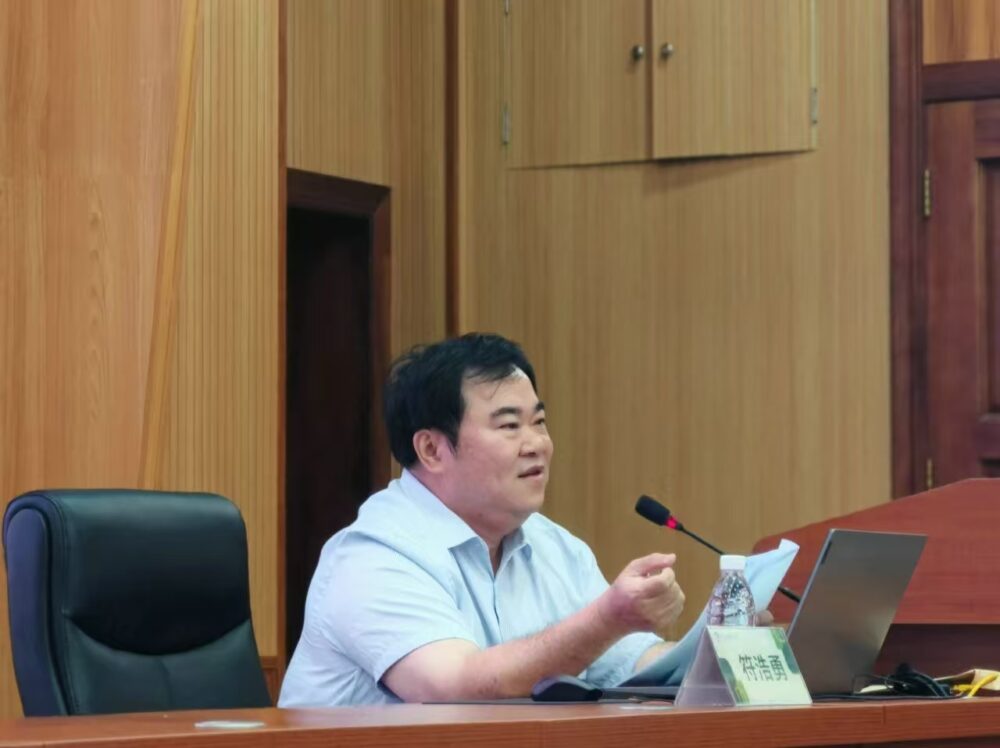
Author Biography:Fu Haoyong is a member of the China Writers Association, vice chairman of the China Financial Writers Association, and formerly vice chairman of the Hainan Provincial Writers Association. He has published over 600 short stories and novellas in more than 90 provincial and municipal literary newspapers and periodicals nationwide, including *People's Literature*, *Contemporary*, *Qingming*, *Baihuazhou*, *Tianya*, and *Xiaoshuo Jie*. He is the author of 28 works, including the novel *Siyingling People*, the short story collections *You Are Blind If You Don't Know How to Cry* and *How Can You Be Warm Alone*, and the poetry collection *There Is No Hometown Moon in the City*. He has won the Hainan Provincial Nanhai Literary Award, the 6th National Golden Sparrow Award for Short Stories, and the *Fiction Selection* Most Popular Reader Award.