"The Legend of the Heroic Sons and Daughters of the Yellow River": Telling the "Yellow River Story" Well to Foster a Sense of Unity
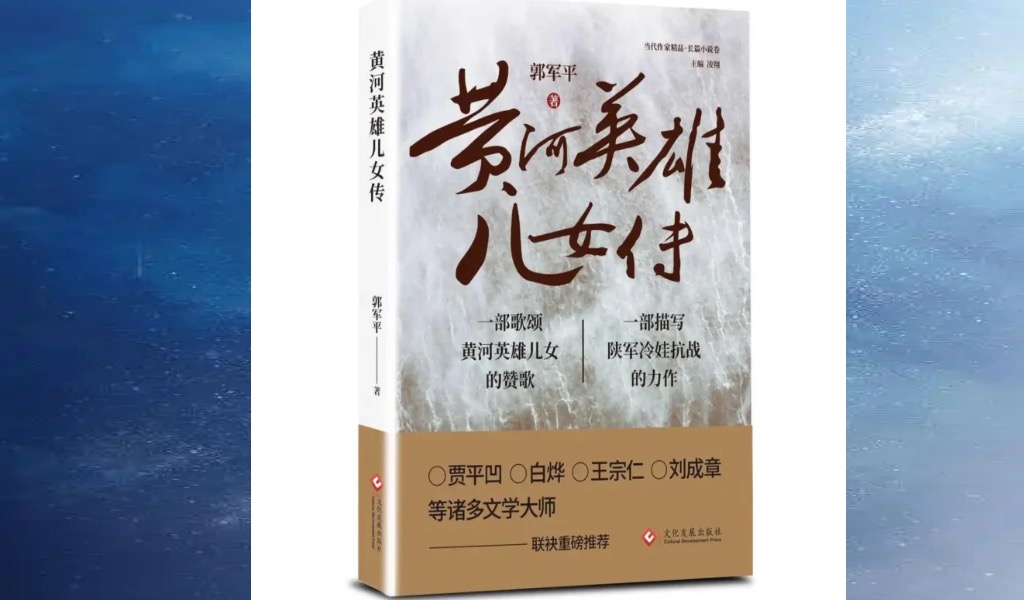
Mr. Guo Junping's epic novel “The Legend of Yellow River Heroes and Their Children” from Chengcheng Middle School in Shaanxi Province is a masterpiece of our times, born to tell the "Yellow River story" and rally spiritual strength.
This work, at 250,000 characters long, is a sprawling and captivating narrative. The novel depicts the heroic sons and daughters of the Yellow River region spanning Qin, Jin, and Yu, particularly the courageous youths of Shaanxi, who bravely resisted Japanese aggression, united against invaders, defended their homeland, and engaged in a battle of wits and courage against the Japanese devils, bandits, Kuomintang reactionaries, and traitors. After enduring numerous hardships and twists and turns, they ultimately achieved victory. The novel has a clear and focused theme, with well-developed characters, and is imbued with revolutionary heroism and patriotic sentiment.
It is well known that the “three elements” of a novel are setting, plot, and characters. The central task of a novel is to create characters with distinct personalities and full, lifelike portrayals. Through a convoluted and rich storyline, and characters with distinct and vivid personalities, a profound thematic idea is vividly revealed. The author is well aware of this principle, with an ingenious conception, a complete structure, and a tight plot. The author uses an artistic technique that develops from a point to a line, from a line to a surface, and radiates from multiple points. With reciprocal foreshadowing and natural transitions, the author not only successfully created positive characters such as Guo Fei, Ye Jian, Han Cheng, Han Xiaomei, Yu Ru, and “Sai Guifei,” but also effectively shaped negative characters such as Pangolin, Xue Banxian, Qin Yiming, Ito, Huang Renhe, and Zeng Wantou, adding new artistic images to the gallery of contemporary Chinese full-length novels.
The novel begins by vividly portraying the artistic image of sniper Guo Fei, immediately immersing the reader in the war-torn, brutal, and bloody era of conflict, thus sparking strong reading interest. Facing the Japanese devils who looted, killed, and plundered, arrogant and overbearing, Guo Fei, with his daring yet meticulous nature, exceptional intelligence, and composure in the face of danger, displayed agile movements. Alone, he infiltrated the dense forests on the hillside, relying on his years of combat experience and intimate knowledge of the terrain to engage and outmaneuver fifteen or sixteen devils, ultimately sending them to their demise... Guo Fei is present from beginning to end of the novel. He is one of the main characters meticulously crafted by the author, leaving readers with a vivid and profound impression.
In addition, the novel successfully shapes the characters of Ye Jian, Han Cheng, Han Xiaomei, Yu Ru, and “Sai Guifei”. Among them, Ye Jian is the political commissar of the Shaanxi-Nantong guerrilla forces led by the Communist Party. He participated in the Nanchang Uprising and is a commander with a firm will and rich experience in revolutionary struggles. Famous battles such as the Night Raid on Fenglingdu and the Great Victory at Puzhao were all meticulously planned and commanded by him. Through the deeds of Commissar Ye, a Communist, who mobilized the masses and organized civilian anti-Japanese armed forces to actively participate in the War of Resistance along the banks of the Yellow River and at the foot of the Zhongtiao Mountains, the novel artistically portrays that the Communist Party of China leading the people is the mainstay of the War of Resistance.
The novel's environmental descriptions are quite skillful. The descriptions of the natural environment excel at integrating natural landscapes with local historical sites, classical poetry, and historical stories, showcasing distinct regional characteristics and ethnic customs, which further highlight the long and profound historical and cultural heritage. The descriptions of the social environment include portrayals of the Japanese invasion and occupation as well as accounts of the Shaanxi Army's brave resistance and the anti-Japanese armed forces inspired by the Communist Party of China. These depictions are vivid, detailed, and deeply moving.
Contemporary renowned writer and Chairman of the Shaanxi Provincial Writers Association, Jia Pingwa, praised: “Depicting the Shaanxi ”Leng Wa“ resisting the Japanese invasion is written vividly and dynamically, filling a historical void in the Shaanxi Army's war of resistance. It is very valuable and worth reading.” Renowned literary critic Bai Ye inscribed the book title; renowned military writer Wang Zongren provided an inscription for the book, praising: "The Yellow River roars, Zhongtiao leaps, and Chinese heroes bravely launch a surprise attack." Renowned writer Liu Chengzhang wrote the preface for the book, in which he praised: "The spirit of the Shaanxi Army's 'Leng Wa' fighting with fervor and blood, as intensely depicted in this novel, is praiseworthy and fills a historical void in the Shaanxi Army's war of resistance. This is very precious, and its ideological and artistic value is primarily reflected in this."
The publication of this novel, like a timely rain, not only answers the nation's call to tell the “Yellow River story well” and consolidate spiritual strength, but also alleviates Mr. Chen Zhongshi's regret. It is both admirable and praiseworthy.
Author Biography:
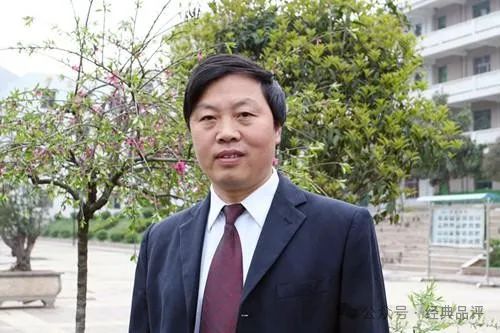
Cao Yu, born Cao Kezhi, was from Shanyang County, Shaanxi.Bachelor's degree, senior middle school Chinese language teacher.Shanyang County's first batch of outstanding top talents.Member of the Chinese Contemporary Literature Society, the Chinese Essayists Association, and the Western Literature Association.Expert on the new national curriculum's accessible classic reading expert team for primary and secondary schools.A writer popular with middle and high school students, and a third contracted writer on Shanghai Literature and Art Net.Published more than 800 literary works, totaling over 1 million characters, in national newspapers and periodicals.Works have been included in over 40 major national poetry and prose anthologies."The Purity of the Lotus" won the Award of Excellence for Outstanding Achievement at the 3rd China Prose Elite Awards."Water Spirit of Zhouzhuang" won the 2012 China Prose Huabiao Award for Best Work."The Eternal Red Cliff" won the second prize in the 2nd China Prose Masterpieces Award in Shanghai in 2015.《Traveler's Song》《Zhuang Zhou's Dream of the Butterfly》《Graceful Goddess》《A Pot of Moonlight to Accompany Wine》《The Eternal Red Cliff》 and others have been selected for modern Chinese reading comprehension tests in monthly, mid-term, and mock college entrance examinations.
Editor's note:
The literary scene is exploding!
The excellent work ”Legends of the Yellow River Heroes“ that tells the "Yellow River story" well and gathers spiritual strength has once again become popular in the contemporary literary world! It has attracted attention and sparked heated discussions!
Time is the only standard for testing a good work. Three years after its publication, the novel "Heroes of the Yellow River Children's Tales," the first full-length novel reflecting the Shaanxi Army's resistance against Japan, which had once faded from public view, is once again popular, blooming for a second time, and receiving unanimous praise!
The book has been praised by renowned writer Jia Pingwa: “It depicts the Shaanxi youths” fight against Japan with vividness and dynamism, filling a historical void in the Shaanxi army's resistance and is very valuable and worth reading."
The book was successfully selected for the “Take a Good Book Home for the New Year” reading and essay contest's recommended book list, hosted by the Yellow River Basin Public Library Think Tank Service Alliance (Nine Provinces Libraries) and organized by the Inner Mongolia Autonomous Region Library.